Custom software development company in Tampa Bay, how to choose one
/ 29 min read
TL;DR
Choosing a custom software development company in Tampa Bay requires prioritizing code ownership, understanding the developer's incentives, and verifying their project track record before making a decision.
Key takeaways
Ownership of source code, repositories, databases, and hosting accounts after final payment is the primary differentiator between true custom builds and disguised subscriptions that lock you into ongoing vendor relationships.
A developer's financial incentive fundamentally shapes their recommendations, so you must ask whether they are a platform partner or reseller before accepting advice about which tools to use.
Local proximity matters most for discovery meetings where someone observes your actual operations and workflows, but less for the coding phase which can be done effectively from anywhere.
Request the complete project record showing how many systems have been delivered, in which industries, and ask for references including two clients with challenging projects to assess the firm's real-world problem solving ability.
A fixed quote should only follow a thorough scoping conversation with your team, never after an initial call, because preliminary pricing estimates without full requirements understanding are essentially guesses.
Custom development is the wrong solution for standard business needs like accounting ledgers, payroll processing, email systems, and teams with processes that change frequently each month.
All hosting accounts and system credentials must be created under your company name with the developer as an invited and removable user to ensure you maintain full control and portability of your business systems.
The short version
Choose a custom software development company in Tampa Bay by what it sells and what you own at the end. A builder writes code that belongs to you and bills once. A reseller configures someone else's subscription and gets paid again every year you renew. Those are two different businesses.
Ask three questions on the first call. Who owns the code and the hosting accounts when the invoice is paid? Are you a partner or reseller of any platform you might recommend? Can I see the last twenty projects you shipped? A firm that answers all three plainly is worth a second meeting. A firm that dodges one of them is answering you anyway.
Key takeaways
Local matters less than you think for the build and more than you think for discovery, because somebody has to sit in your warehouse and watch how the work really happens.
Many Tampa Bay software firms are platform partners. That is not dishonest, but it changes what they recommend, and you should know before you take the recommendation.
Every account the system runs on should be created in your company name, with the developer invited in and removable.
Ask for the project record, not the pitch deck. Black Badger's is at /work, and 467 delivered projects is a number you can hold a firm to.
A fixed quote before a scoping conversation is a guess. Nobody should price your system off a thirty minute call.
Custom is the wrong answer for accounting ledgers, payroll, email and small teams with a process that changes every month.
Comparing firms is harder than comparing software. Software has a pricing page. A development company has a website full of adjectives. So this page gives you a checklist you can run on any firm in Tampa, St. Petersburg, Clearwater or anywhere else on the Gulf Coast, including the one that wrote it.
How do you choose a custom software development company in Tampa Bay?
Start with ownership, then incentive, then record. Everything else is detail. If you own the code and the accounts, if the firm has no financial reason to steer you toward a subscription, and if it can show you dozens of finished systems, you are already past most of the market.
The reason to lead with ownership is simple. Custom software only beats a subscription if the thing you buy is actually an asset. If the firm keeps the code, hosts it on its own account and charges you a monthly fee to access it, you have not left the subscription model. You have swapped a big vendor with a published pricing page for a small vendor without one. That is usually worse.
Incentive comes second because it quietly decides the recommendation. A firm that earns a margin on platform licenses will find a reason the platform fits. A firm that only earns money by building will find a reason to build. Neither one is lying to you. Both are human. Your job is to know which pressure is operating on the person across the table.
Record comes third, and it is the easiest to verify. Ask how many systems the firm has delivered, in what industries, and what happened to them afterward. Ask for two clients whose project went badly and what the firm did about it. A shop that has shipped a lot of work has a few of those stories and will tell them. A shop that claims every project was a triumph has either shipped very little or is editing.
Here is the practical screen, in order, for any firm you talk to on the Gulf Coast.
Who owns the source code, the repository, the database and the hosting accounts after final payment
Whether the firm is a reseller, partner or certified implementer of any software it might recommend
How many systems it has actually delivered, and where you can see them
Whether it will commit to a fixed scope and a fixed quote after a real scoping conversation
What the system costs to run every month, and who that money is paid to
What happens if you want a different firm to take over in year three
Run the same six questions on every firm and write the answers in a spreadsheet. You are not grading charisma. You are comparing six facts, and the differences between firms show up fast once the answers sit next to each other.
Does the developer need to be local?
No, not for the coding. Code gets written the same way in Clearwater as it does in Austin. Where local matters is discovery, the part where somebody learns how your business actually works before a line of code exists.
Discovery goes badly over video. Your dispatcher has a sticky note on her monitor that explains the real rule for job numbers. Your warehouse lead keeps a second spreadsheet because the official one lies about stock. Nobody mentions either of those on a Zoom call, because to them they are not part of the process. They are just Tuesday. Someone standing in the room sees them in an hour.
That is the honest case for hiring near you. A firm in Pinellas or Hillsborough can sit with your operations team for a day, watch the work, and come back with a scope that matches reality. Travel is not a line item. Follow-up visits happen because somebody drives twenty minutes.
The dishonest case for local is the one about time zones and culture fit. Plenty of distributed teams ship excellent work. If a firm three states away has the better record and a real plan for on-site discovery, hire them. Proximity is a convenience, not a qualification.
There is a second local benefit that nobody puts in a brochure. Accountability has an address. A firm with an office you can drive to, in a market where your peers talk to each other, has more to lose from a bad project than an anonymous shop you found through a marketplace. Black Badger works out of 1221 Turner St, STE 206 in Clearwater, serving Pinellas and Hillsborough counties, and you can read more about that coverage on the Tampa page.
Ask any firm, local or not, how many days of on-site discovery are included before the quote is written. If the answer is zero, the quote is a guess dressed up as a number.
What separates a builder from a reseller or a consultant?
Money direction. A builder is paid once for an asset you keep. A reseller is paid by you to set up a subscription, and often paid again by the vendor as a share of your license spend for as long as you renew. A consultant is paid for hours and advice and does not necessarily build anything.
All three exist in Tampa Bay and all three are legitimate. The trouble starts when a reseller markets itself as a custom development company. The website says custom software. The actual deliverable is a configured platform, a pile of automations and a monthly bill that grows with headcount. You did not buy software. You bought a setup service for software you rent.
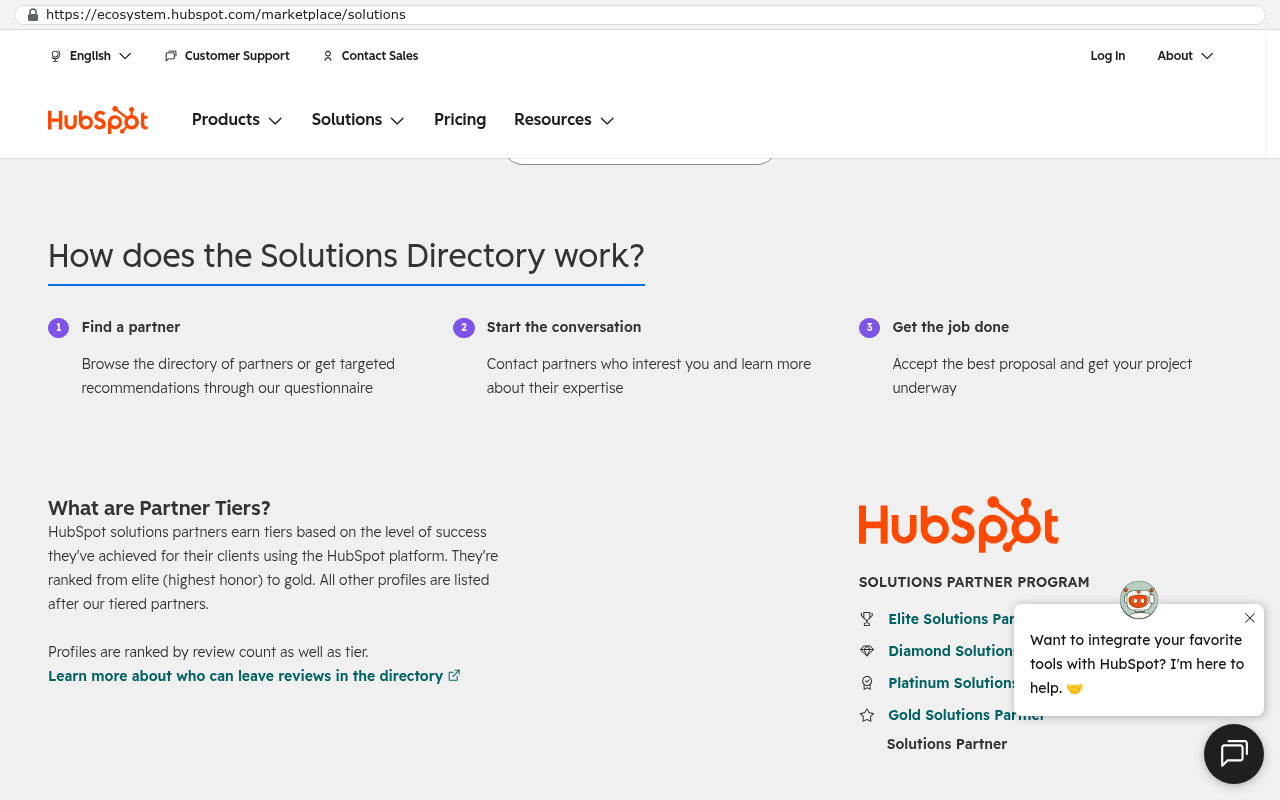
Platform partner programs are public and easy to check. Most major vendors publish a partner directory. Search the firm's name in it. If they are listed, that is not a reason to walk away, but it is a reason to ask the follow-up question. How much of your revenue comes from license margin or referral fees? A firm that answers honestly is one you can work with. A firm that gets uncomfortable has told you the answer.
Why the incentive actually changes the advice
Picture a sixty person construction firm looking at project management software. A partner firm's best outcome is sixty seats on an annual plan, plus an implementation fee, plus a retainer to maintain the automations. A builder's best outcome is one project. Those two firms will walk into the same conference room, hear the same problems, and sincerely recommend different things.
Black Badger was a partner of several major platforms and cancelled those partnerships. That was a business decision with a cost attached, because partner margin is steady revenue. It also removed the pull. Black Badger does not configure, administer, patch or resell any platform, and will not offer to. If what you need is somebody to clean up your monday.com board structure, that is real work and a partner firm should do it.
When a reseller is the right hire
Pick a reseller when the platform genuinely fits and the problem is setup. A thirty person agency that wants HubSpot configured properly, with deal stages that match how they sell, should hire a HubSpot partner. A manufacturer mid-way through a NetSuite rollout that is going sideways needs a NetSuite implementer, not a greenfield build. Replacing software that works is an expensive way to solve a configuration problem.
Watch for the firm that recommends a platform, implements it, then sells you a retainer to maintain the implementation forever. That is three revenue streams from one decision, and the decision was made by the person collecting all three.
Who should own the code and the accounts?
You should, and the test is whether you could fire the developer tomorrow and keep running. Ownership is not a clause in a contract. It is whose name is on the accounts.
There are four accounts that matter. The code repository, which is where the source code lives. The database, which holds your actual data. The hosting account, which runs the application. And the email or messaging service the system uses to send notifications. Every one of those should be created in your company name, paid by your card, with the developer invited in as a user you can remove. That is how Black Badger sets up every system, and it is the single cleanest signal a firm can give you about what it thinks ownership means.
The common alternative sounds reasonable and is a trap. The firm hosts everything under its own umbrella account, bills you a flat monthly fee that covers hosting and support, and handles the technical details so you do not have to. Convenient. Also a hostage situation if the relationship ends badly or the firm closes. You will spend months and real money extracting a system you supposedly own.
Ask for the repository URL during the project, not at the end. If you can log in and see commits happening in week two, ownership is real. If the firm promises a handover package at the end, you are trusting a future version of a relationship that has not been tested yet.
Look at finished systems, not logos. A logo wall tells you a company once invoiced somebody. A case study with a problem, a build and a result tells you what actually happened.
Black Badger has delivered 467 projects and the case studies are published at /work. The point of saying that here is not the number. It is that you should check it rather than take it, the same way you should check any firm's claim. Read two or three of the write-ups. See whether the problems described sound like problems you recognise, or whether they read like marketing with the specifics sanded off.
References are worth more than case studies if you ask the right question. Do not ask whether the client was happy. Ask what the firm got wrong, and how it handled being wrong. Every project of any size has a moment where something was mis-scoped or a key assumption broke. The useful information is what the firm did in that week.
Three more checks that cost you nothing. Ask who will actually write your code and whether you will meet them. Ask how long the firm's average project runs and what the longest one was. Ask whether any system they built is still running five years later, and who maintains it now. The last one separates firms that ship from firms that launch.
What a weak record looks like
Beware the portfolio of marketing websites with one enterprise system at the end. Building a content site and building an operations system are different jobs. Beware a firm whose examples are all from one vertical if you are not in that vertical, and beware one that cannot name a single project that did not go to plan. Also be careful with firms that have a large offshore delivery team and a small local sales team. That can work well. It can also mean the person who understood your business never speaks to the person who writes the code.
What should a proposal contain, and what should it leave out?
A good proposal reads like a plan, not a brochure. It names what gets built, what explicitly does not get built, what data moves, who trains your staff, and what the thing costs to run after launch.
The scope section is where you find out how well the firm listened. It should describe your workflow back to you in your own language. Job numbers, draw schedules, change orders, whatever your business actually calls things. If the proposal describes generic modules for task management and reporting, nobody did discovery. They wrote a template.
Data migration deserves its own section with a number attached. How many records, from what system, going back how far, including attachments or not. Moving a decade of files out of a platform is a scripted export and a validation pass, not a download. A proposal that treats migration as a bullet point has not thought about it, and migration is where timelines die.
Training and handover should be explicit. Who gets trained, for how long, and what documentation exists at the end. The best handover package includes a plain English description of how the system is structured, so a future developer who has never met the original team can pick it up.
Here is what a proposal should leave out. Open-ended hourly billing with no ceiling. A discovery phase priced separately with the real build quoted later. Any license, seat fee or platform subscription hidden in a line called infrastructure. And vague maintenance retainers that do not say what they cover.
Ask for the out of scope list in writing. A firm that will tell you what it is not building has thought about the boundaries. A firm that says everything is included has not, and the argument arrives in month three.
How does AI assisted development change who you should hire?
It changes the economics of building and almost nothing about the judgment. AI tools write code faster than a human types. They do not know that your billing rules differ for government jobs, and they will happily produce something confident and wrong.
What AI assistance genuinely does is collapse the grunt work. Scaffolding, forms, standard database access, test coverage, boilerplate integrations. Work that used to take a developer a week takes a day. That is why custom builds now compete on price with multi-year subscriptions in cases where they simply could not a few years ago. The arithmetic moved.
What it does not do is remove the need for someone who understands your operation. The hard part of your system was never the code. It is deciding what the system should do, in what order, with which exceptions. AI has no opinion about whether your change order process should block invoicing. A developer who spent two days in your office does.
So when you are comparing firms, ask how they use AI and what they review. The good answer is specific. They use it to accelerate implementation, every change is reviewed by a human who understands the domain, and tests exist that prove the business rules still hold. The bad answer is either marketing noise about an AI-powered methodology, or a flat denial that they use it at all, which in a competitive market means you are paying for typing.
There is a second question worth asking. Does the firm build AI features into the system itself, or just use AI to write it? Those are different. A system that reads incoming emails and drafts a job record is a product decision with ongoing cost. A system built quickly with AI assistance is a delivery decision. Both can be good. Know which one you are buying.
Mostly per seat platforms that grew past their usefulness. Smartsheet and monday.com for project work, Zoho and HubSpot for sales, Salesforce and NetSuite at the larger end. The pattern is the same regardless of the logo. The tool worked at thirty people and strains at a hundred and twenty.
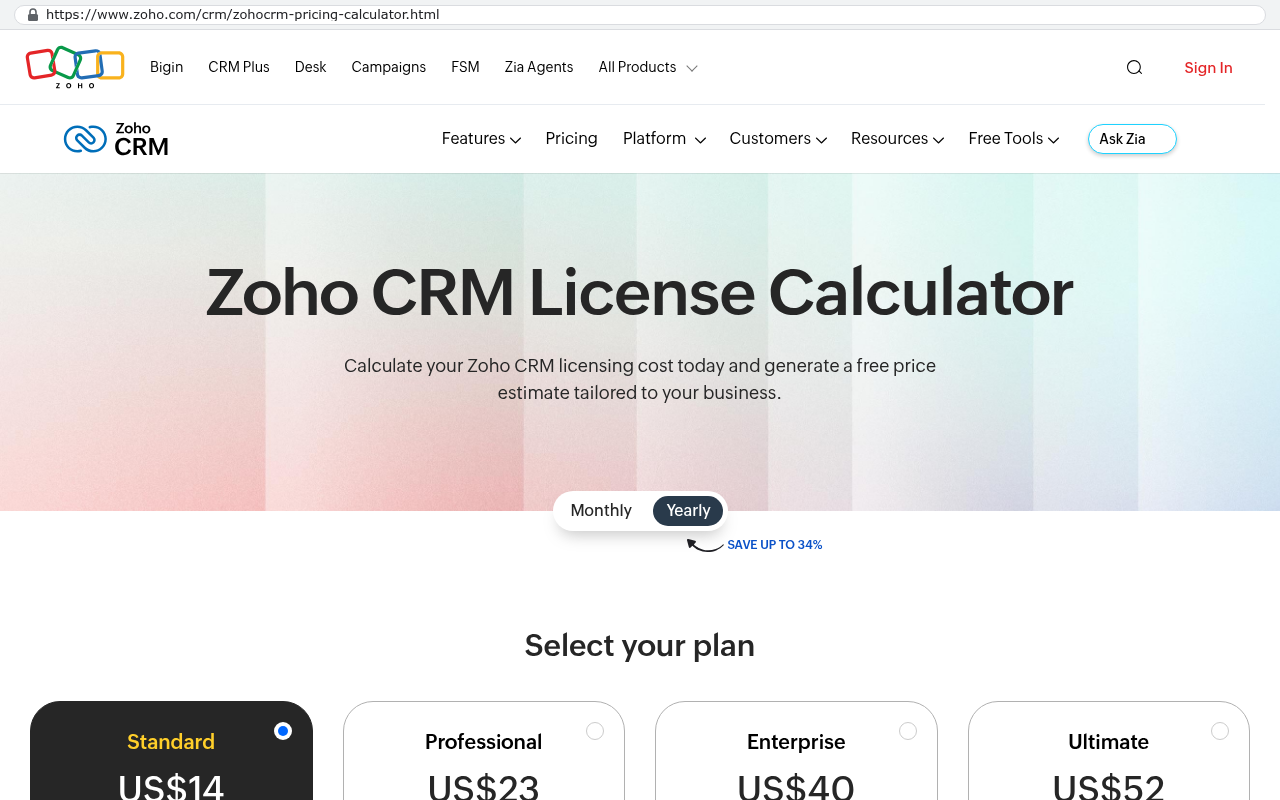
The seat math is what pushes it over. Smartsheet's public pricing page lists its Business plan at $24 per member per month billed annually with a three member minimum, and Enterprise as a quote rather than a published figure. monday.com's pricing page lists the Pro plan at $19 per seat per month billed annually, also with a three seat minimum. Zoho's CRM pricing page lists Enterprise at $40 per user per month billed annually. Multiply any of those by a hundred and twenty people and add five years, and you are looking at a number large enough to build something.
Zoho CRM License Calculator page showing plan pricing with Enterprise at US$40 per user per month when billed yearly Source: www.zoho.com/crm/zohocrm-pricing-calculator.html
The second driver is the shape of the work. Platforms are built to serve thousands of companies, which means they serve the average of those companies. A specialty contractor, a marine services firm, a distribution business with consignment inventory, those operations have rules the platform was never designed for. So the team builds workarounds. A board per project. A spreadsheet beside the system. A person whose actual job is keeping two tools in agreement.
Those workarounds are the real cost and they never show up in the renewal quote. When a firm tells you a platform can do what you need, ask how. If the answer involves three automations, a mirrored column and a monthly export, the platform cannot do what you need. It can be bent into approximately doing it.
Where the replacements usually land
Project and job tracking systems that match the actual sequence of work, including the awkward steps. Customer and pipeline systems that hold the fields your industry needs without paying per seat for them. Operations systems that merge two or three tools into one place. Client portals, where the question is genuinely close and worth thinking about carefully. You can read how each of those usually goes on the project management, CRM and enterprise pages, and the platform-specific paths are mapped at Smartsheet to AI, monday to AI and Zoho to AI.
What will it cost, and why should nobody quote before scoping?
Nobody can quote your system from a discovery call, and a firm that does is pricing a fantasy. What a serious firm gives you instead is a process. A scoping conversation, then a fixed scope document, then a fixed quote against that scope, then four honest answers to every feature request that comes up after.
Those four answers are worth spelling out. Yes, that is in scope and it is being built. Yes, that is worth building and it goes in a second phase with its own number. No, that is a workaround for a problem the new system removes. And no, that is not a software problem, it is a policy decision your team has not made yet. A firm willing to say the last two is a firm that will finish on budget.
Run cost is the part most buyers forget and it is the part you can know up front. After launch the system costs roughly $100 to $200 a month to run for a smaller company, and $2,000 to $3,000 a month at enterprise scale, paid to the hosting providers directly, with no license and no per user fee. That is hosting, database and email. It does not change when you hire ten people.
Now the arithmetic that actually decides this. A Texas contractor facing a $1.3 million five year Smartsheet contract had the system rebuilt in 16 weeks for $375,000, and the license bill went to zero. A company paying $125,000 a year in licensing had it replaced in six weeks for $85,000, owned outright. In the second case the build paid for itself inside a year. In the first, the five year saving is close to a million dollars before you count the staff time that went into workarounds.
Run your own version of that sum before you call anyone. Take your current annual license spend, multiply by five, and add whatever increase your vendor has applied over the last three renewals. That number is the honest comparison, because the subscription does not stop at year one and the build does.
Be suspicious of a firm that quotes fast and low. The cheap number usually covers the obvious features and excludes data migration, integrations and training, which is where the real hours live. You will meet those costs anyway, just later and as change orders.
Often enough that any firm claiming otherwise is selling. There are whole categories where buying beats building, and a few situations where the timing is simply wrong even though the logic is right.
Do not build accounting. QuickBooks, Xero and the rest handle tax rules, bank feeds and audit trails that change every year, and keeping up with that is a full time product team's job. The right move is a custom operations system that talks to the accounting package, pushing invoices and pulling payment status. Same for payroll, same for email, same for document signing. Those are solved problems with cheap, mature answers.
Do not build when your process is still moving. If your operations team changed the workflow three times this year because the business model is still settling, a flexible platform is the correct tool. Build when the process has stabilised enough that the rules are worth encoding. Building a system around a process you are about to abandon is an expensive way to document history.
Do not build for a small team on a cheap plan. Twelve people on a basic subscription are not spending enough for the sum to work. The math turns somewhere around the point where annual license spend passes the mid five figures and keeps climbing, or where staff time spent on workarounds becomes a visible line.
The external collaboration problem
This is the limitation that surprises people. If a meaningful part of your platform's value is sharing live sheets or boards with clients and subcontractors who already work in that platform every day, replacing it has a cost beyond the build. Those external parties have their own logins, their own habits and no interest in learning your new portal. A custom system can absolutely give them a clean portal, and often a better one. But the change management is real and somebody has to own it. Pretending that cost is zero wastes everybody's time.
The migration cost nobody quotes
Twelve years of attachments do not copy and paste. Getting them out takes a scripted export against the vendor's interface, a mapping of which file belongs to which record, and a validation pass where a human checks a sample. Some platforms make this straightforward. Some rate-limit the export so hard that pulling a large archive takes days of running jobs. Ask about this specifically, by name, for your platform.
Keep it to ten questions and ask the same ten of everyone. The goal is a comparison, not a conversation. You will learn more from how a firm answers an uncomfortable question than from anything on its website.
Who owns the source code, the database and the hosting accounts after final payment, and whose name is on those accounts
Are you a partner, reseller or certified implementer of any software you might recommend to me
How many systems have you delivered, and where can I see them
Will you commit to a fixed scope and a fixed quote, and what does it take to get there
Who will write my code, and will I meet that person
What does the system cost to run each month after launch, and who is that paid to
How do you handle data migration, including attachments and historical records
What happens if I want another firm to take over in two years
Tell me about a project that went badly and what you did
What would make you tell me not to build this
The last question is the one that sorts the field. A firm with a real point of view will name conditions. Your process is not stable. Your license spend is too low. The platform you are on fits better than you think. A firm that cannot imagine a scenario where you should not hire them is not giving you advice.
What happens after launch, and who fixes things?
Something always needs fixing in the first month, and the arrangement for that should be written down before launch rather than negotiated during it. Real users find edge cases that discovery missed. That is normal and not a sign the project failed.
Ask three things about the post-launch period. What is covered as warranty, what counts as a new request, and what the response expectation is. A sensible structure covers genuine defects for an agreed window and treats new features as new work with their own scope. Vague promises of ongoing support are where goodwill goes to die, because the firm thinks it means bug fixes and you think it means anything you ask for.
The more important question is whether you are free. Because you own the code and the accounts, you can hire a different firm, bring maintenance in house, or do nothing at all for two years and come back when you need a change. A system with no license does not expire while you ignore it. That is the practical difference between owning and renting, and it only shows up when something goes wrong with the relationship.
Plan for small change requests. Every operations system gets requests in year two, usually because the business grew or a process changed. Budget attention for that rather than money, because the requests are typically small and the firm that built it can knock them out quickly if they still have the context.
Write down, before launch, who at your company owns the system. Not the IT contact. The operations person who decides what gets changed. Systems without an internal owner drift and get blamed for problems they did not cause.
How do the integrations work with what you already run?
Most custom systems do not replace everything, and they should not try. The usual shape is one operations system in the middle that holds the work, connected to the accounting package, the email platform and whatever specialist tool your industry depends on.
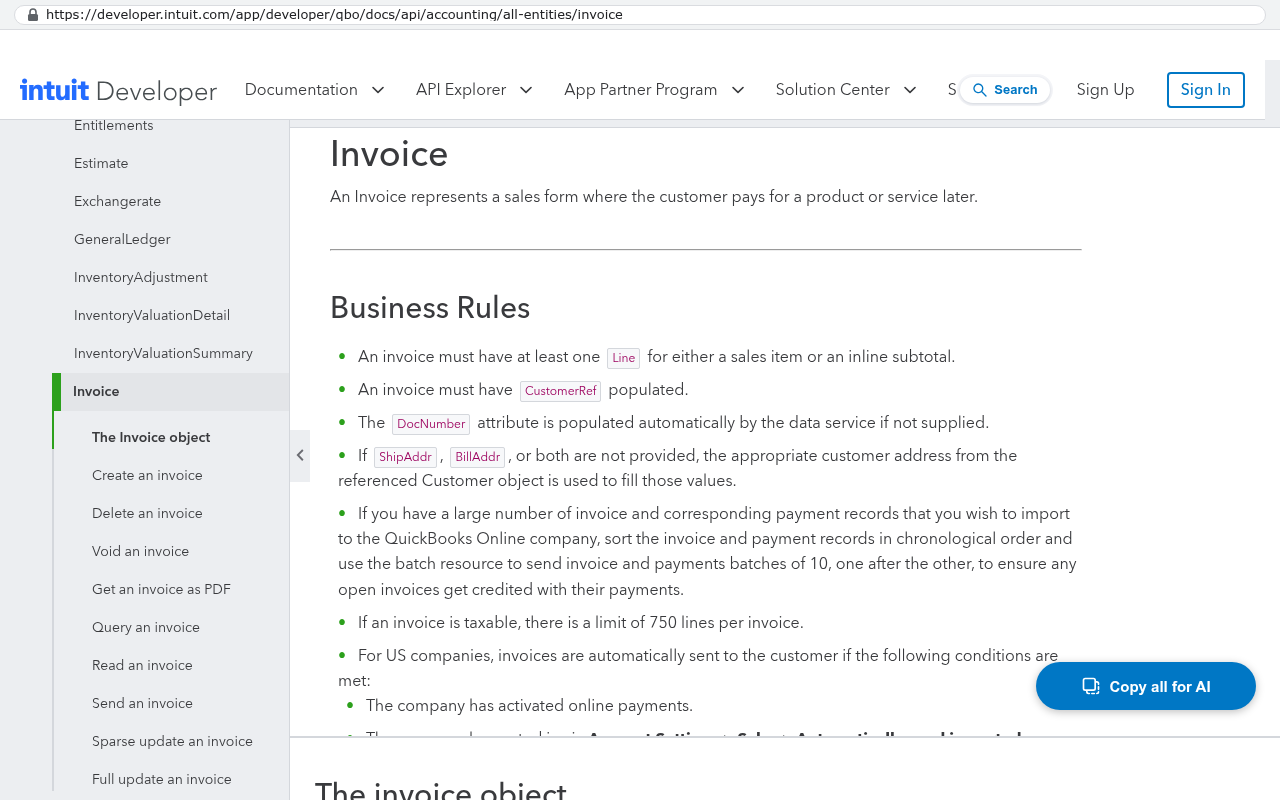
QuickBooks Online is the most common connection in this market. Invoices created in the operations system appear in QuickBooks, payment status comes back, and nobody rekeys anything. That is a well-worn path with a documented interface. Xero, Sage and the larger ledgers are the same idea with different plumbing.
Intuit Developer documentation showing the Invoice API endpoint with Business Rules for QuickBooks Online Accounting. Source: developer.intuit.com/app/developer/qbo/docs/api/accounting/all-entities/invoice
Where integrations get harder is with older or closed systems. A twenty year old industry application with no modern interface may need file-based exchange or a scheduled database read. That is doable and it is also slower and more fragile than a modern connection. Ask the firm to tell you which category each of your systems falls into during scoping, because the difference shows up in the quote.
One honest warning. Integration work is the most commonly underestimated part of any build, by every firm, everywhere. The interface documentation is optimistic, the rate limits are real, and the edge cases around partial failures take time to handle properly. A proposal that gives integrations a confident single line is a proposal that has not read the documentation yet. You can see how this normally gets structured on the integrations page.
Start by writing down what the current software costs you over five years and what your team does to work around it. Those two facts decide whether this conversation is worth having at all, and you can gather both this week without talking to a vendor.
Pull your last renewal invoice. Count your seats and the plan you are on. Multiply by five and add your vendor's historical increase. Then walk the floor and list every spreadsheet, shared doc and manual export that exists because the platform cannot do something. Put a rough hours-per-week number next to each. That list is the actual business case, and most owners are surprised by how long it is.
Then talk to two or three firms with the same ten questions and the same list. Compare the answers side by side. If the honest conclusion is that your platform fits and the problem is configuration, hire a partner firm to fix the configuration and keep your money. That outcome happens and it is a good one.
If the conclusion is that you are paying rent on a tool that does not match how you work, the next step is a scoping conversation. Not a demo and not a pitch. A conversation about what your operation actually does, whether a build makes sense, and what it would take. That includes the case where the answer is no, which is a legitimate result and happens often enough to say out loud. You can read more about how custom builds get scoped on the custom software page, check the record at /work, or reach the Clearwater office at (727) 306-3202.
Frequently asked questions
Do I need to know what I want before I call a development firm?
No, and it is better if you do not arrive with a spec. Bring the problems instead. Bring the spreadsheets your team keeps on the side, the reports you cannot get out of your current tool, and the renewal invoice. A good firm will turn that into a scope. If you hand over a finished feature list, you will get a quote for your assumptions rather than for your actual problem.
How do I know if a firm is really a reseller?
Check the vendor's public partner directory and then ask directly. Most platforms publish a searchable list of certified partners on their own site. Searching the firm's name takes a minute. Then ask what share of revenue comes from license margin or referral fees. It is a fair question and the reaction tells you as much as the answer.
HubSpot's Solutions Directory page explains how the partner directory works and displays the Solutions Partner Program with tiered partner listings including Elite, Diamond, Platinum and Gold partner categories Source: ecosystem.hubspot.com/marketplace/solutions
What if my team hates the new system?
That usually means discovery was thin or training was rushed. The fix is to involve the people who do the work during scoping, not after launch. Show them screens early, let them push back, and change things while changing them is cheap. A system built around how one executive thinks the work happens will get rejected by the people who know how it really happens.
Can a custom system handle compliance requirements in my industry?
Usually yes, and sometimes better than a platform. Audit trails, role-based permissions and record retention are standard things to build. Where it gets involved is industry certification, like specific healthcare or payment card requirements, which add real work to hosting and process. Raise it in the first conversation so it is priced in rather than discovered later.
What if the development firm goes out of business?
You keep running, because the accounts are in your name and the code is in your repository. Another developer can read it. That is the entire argument for owning the accounts rather than accepting a managed arrangement. Ask any firm this question directly and listen for whether the answer requires their continued existence.
Is it cheaper to hire a developer in house?
For ongoing change, eventually yes. For a first build, almost never. One in-house developer is a single point of failure with no second opinion and a long ramp-up. The common pattern is to have a firm build the system, then hire someone internally in year two to own changes once the thing exists and is documented.
How long does replacing a platform take?
It depends mostly on data and integrations rather than screens. A single-purpose system with clean data moves fast. A multi-department replacement with twelve years of attachments and three integrations takes meaningfully longer. The two published examples on this page took 16 weeks and six weeks respectively, which gives you a sense of the spread.
Should I replace everything at once?
No. Replace the piece that hurts most, run it alongside the old system, and prove it works before moving the next piece. Big-bang cutovers fail more often than they succeed, and they fail at the worst possible moment. Phased replacement is slower on paper and faster in practice.
When you are ready, the next step is a scoping conversation about your operation and whether a build makes sense, including the honest case where it does not. You can book a free strategy session and bring your renewal invoice.
Questions
Frequently asked questions
What's the difference between a builder and a reseller for custom software development?
A builder writes code that belongs to you and bills once for the work. A reseller configures someone else's subscription platform and gets paid again every year you renew. These are two different business models with different incentives. A builder has financial motivation to create custom solutions, while a reseller benefits from keeping you on a recurring subscription platform.
Who should own the source code and hosting accounts for custom software?
Your company should own the source code, repository, database, and hosting accounts after final payment. The developer should be invited in and removable from these accounts. If the firm keeps the code and hosts it on their own account while charging you monthly to access it, you haven't moved beyond the subscription model. You've just swapped a large vendor for a small one without transparency.
Do I need to hire a local custom software development company in Tampa Bay?
Location matters more for discovery than for coding. Discovery requires someone to visit your warehouse and watch how your business actually works before development begins. A local developer can sit with your operations team for a day and catch details you wouldn't mention on a video call. However, if a distant firm has a better record and plans real on-site discovery, geography shouldn't disqualify them.
What three questions should I ask on the first call with a development firm?
Ask who owns the code and hosting accounts when the invoice is paid. Ask whether they're a partner or reseller of any platform they might recommend. Ask to see the last twenty projects they've shipped. A firm that answers all three questions plainly is worth a second meeting. If they dodge any question, that's answering you anyway about their incentives.
How should I check a development company's project record?
Ask how many systems they've delivered, in what industries, and what happened afterward. Request examples from two clients whose projects went badly and what the firm did to resolve it. A shop that has shipped substantial work will have these stories and tell them honestly. If a firm claims every project was a triumph, they've either shipped very little or are being selective about what they share.
Why shouldn't a development firm quote a price before scoping?
A fixed quote before a real scoping conversation is a guess. Discovery requires understanding how your business actually works, including the sticky notes and workarounds your team uses daily. Nobody should price your system after a thirty minute call. A firm that insists on quotes before thorough discovery is indicating they don't plan to do real discovery work.
When is custom software the wrong answer for a business?
Custom development is the wrong answer for accounting ledgers, payroll systems, email platforms, and small teams whose processes change every month. These functions are better served by established subscription platforms with proven solutions. Custom software only beats a subscription when you're building something genuinely unique to your business that becomes an asset you own.
A portal is only worth building when the workflow behind it is genuinely yours. Here's how to run the numbers, spot the limitations, and decide before you spend anything.
If this is your situation
Talk it through on a call
Thirty minutes over video with the person who would run the build. You talk, we ask questions, and you leave with a plain read on whether custom software makes sense for you. If the answer is that your current tool is fine and badly configured, you will hear that.
David Verneuille founded Black Badger after 18 years as a project manager and years implementing Smartsheet, monday.com, Wrike and Zoho for clients. He now builds custom systems that clients own outright, which is why the writing here is specific about where each platform fits and where it stops fitting.
Buy the commodity, build the edge. A practical walkthrough of the build versus buy decision in 2026, with real vendor pricing facts, five year arithmetic, and the cases where renewing is the right call.
Custom software is priced by scope, so no honest firm quotes before scoping. Here's the real process, the published run cost after launch, and how it compares with five years of per seat licensing.
Ownership isn't a checkbox, and AI assistance doesn't change what makes a system truly yours. Here's the spectrum, the handoff checklist, the maintenance bill, and the contract language to demand.
An article can only go so far without knowing your systems. Book a strategy call, walk us through what is breaking, and you will get a straight read on whether custom software is the right answer.