
Paying for software does not make you the owner. In the US, a contractor keeps copyright in what they write unless there's a written assignment to you. A clause that says "work made for hire" is often not enough for software on its own, which is why good contracts include a present-tense assignment as a backup. Real ownership also means holding the repository, the cloud accounts, the domain, the documentation and your data, not just a paragraph in a PDF. And ownership has limits. You'll never own the open source and third-party pieces inside your system, and owning code you can't run is a liability, not an asset.
Who owns the code when you hire a software company?
/ 19 min read
TL;DR
Key takeaways
- Copyright in custom software sits with the developer by default, even after you've paid the invoice in full.
- The phrase "work made for hire" has a narrow legal meaning in the US and rarely covers software written by an outside firm.
- Ask for an assignment of all right, title and interest, with a licence fallback if the assignment ever fails.
- Ownership of the code is worthless without the repository, the build instructions, the environment settings and the accounts the system runs in.
- Open source libraries and commercial components stay owned by their creators. You get a licence to use them, and copyleft licences can block you from selling the product later.
- Your business data should be addressed separately in the contract, including the right to a full export in a usable format.
- If you only get a licence rather than ownership, source code escrow is a weak substitute but better than nothing.
On this page
- The legal default works against you
- Assignment, licence, and the gap between them
- Background IP and the carve-out nobody reads
- The parts of "the code" people forget to ask for
- Accounts, domains and keys are a separate problem
- The parts you will never own, and why that's fine
- Your data is its own conversation
- What ownership doesn't actually buy you
- The arithmetic, when ownership is the better deal
- The questions to ask before you sign
- How we do it, and what to do next
- Read this next
- Frequently asked questions
Most software contracts are vague about who owns the finished code. That vagueness is not neutral. Under US copyright law, the person who writes the code usually keeps it unless a signed document says otherwise. So if you paid for a system and the agreement is silent, you may have bought a licence to use something you don't own. Here is how ownership actually works, what to ask for, and where owning the code helps you less than you'd hope.
The legal default works against you
People assume that paying for something means owning it. Buy a laptop, own the laptop. Software doesn't work that way. Copyright attaches to the author the moment the code is written. If the author is your employee doing their job, your company owns it automatically. If the author is an outside firm or a freelancer, the author owns it, and you get whatever rights the contract gives you. Pay in full, get the files, use the system happily for three years, and the developer can still hold the copyright.
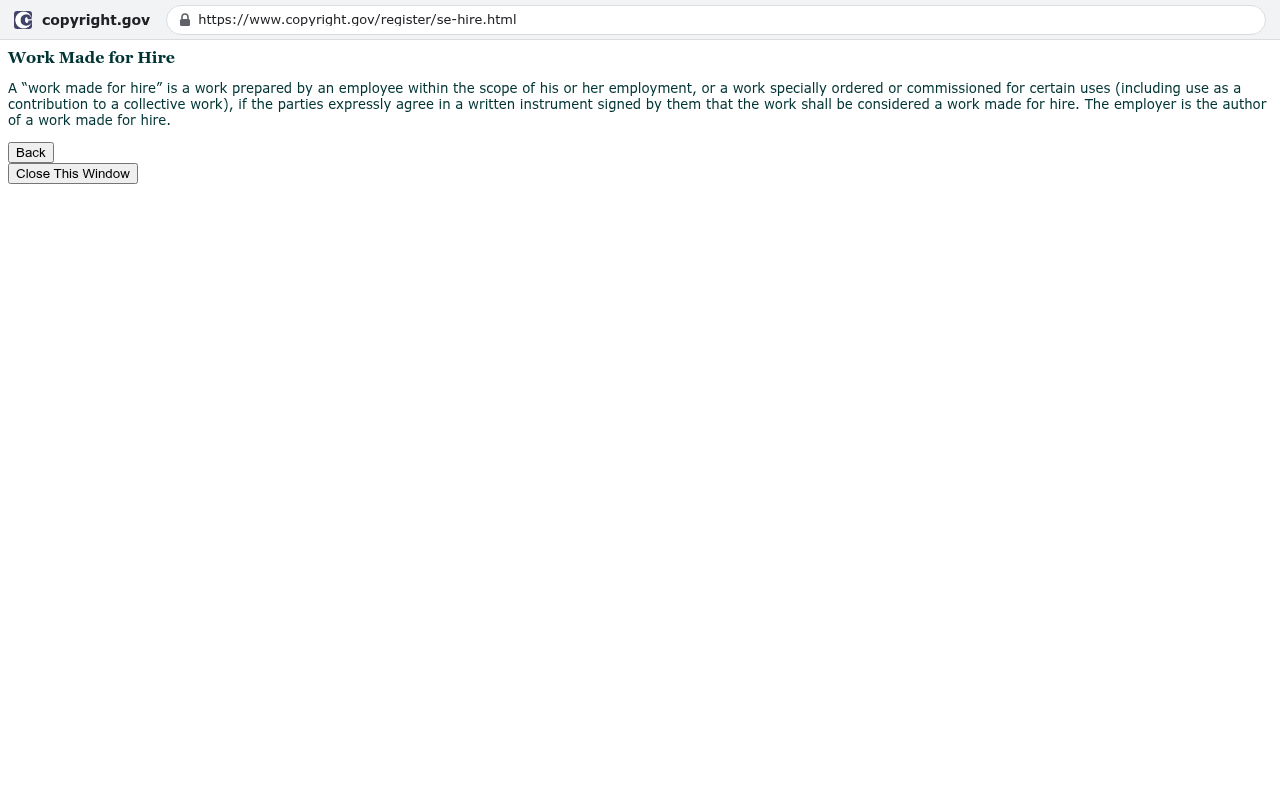
There's a phrase that shows up in nearly every development contract. Work made for hire. Owners read it and relax. In US copyright law that term has a specific, narrow meaning. For work by a non-employee, it only applies to nine listed categories, including films, translations and contributions to collective works. Custom business software is not on the list. A court can decide the clause does nothing at all.
That's why good contracts don't rely on it. They add a present-tense assignment. Something like "Developer hereby irrevocably assigns to Client all right, title and interest in the deliverables." The word "hereby" matters. It transfers the rights now, rather than promising to transfer them later, which keeps you out of trouble if the firm shuts down or sells. Then there's usually a third layer, a broad perpetual licence that applies if the assignment is ever held invalid. Belt, braces, and a spare belt.
A contract that only says "all work shall be considered work made for hire" and stops there is a red flag. It's the single most common ownership gap in small and mid-sized software agreements, and it usually isn't malicious. It's a template someone copied in 2011. Ask for an assignment clause to be added. An honest firm will say yes in about ten minutes.
Assignment, licence, and the gap between them
There are two ways a firm can give you rights. Assignment means the copyright moves to you. You become the owner. You can change the code, sell it, give it away, or hire anyone you like to work on it. A licence means the firm stays the owner and grants you permission to use the work under stated terms.
Licences are not automatically bad. They're how most of the software industry functions. The problem is what sits inside the terms. A licence can be limited to a number of users. It can be limited to one location or one entity, which becomes a mess if you acquire a company or spin out a division. It can forbid you from modifying the code. It can forbid you from letting another developer touch it, which ties the firm to every future change. And it can terminate. Read the termination section of any licence carefully, because a licence that ends when the support contract ends is a rental with extra steps.
If you're commissioning a system that runs a core part of your business, press for assignment. Order intake, scheduling, quoting, production tracking, client portals. These are the systems you cannot switch off. Renting the rights to your own operations is a bad position, and the cost difference at the point of signing is usually small or zero.
Where a licence is reasonable is when the firm has a genuine pre-existing product or framework and your project is a layer on top of it. Nobody is going to hand you ownership of the platform they've spent six years building and resold to forty other clients. That's fair. What you want in that case is ownership of everything specific to you, plus a perpetual, irrevocable, transferable licence to the underlying pieces, with the right to modify them and to hire any developer you choose.
Background IP and the carve-out nobody reads
Nearly every assignment clause has an exception for the developer's pre-existing material. It's often called background IP or developer tools. Good firms have internal libraries. Reusable authentication, reporting components, deployment scripts. They've been refining them for years, and they're not giving them away because you hired them for one project.
The carve-out itself is normal. What matters is how wide it is. A tight version lists the components by name and grants you a perpetual licence to use and modify them as part of your system. A loose version says "anything Developer created before or during the engagement that is of general applicability", which can swallow the whole project. Under that wording, the firm can argue that the scheduling engine, the one piece you actually paid for, is a general-purpose component they happen to be licensing to you.
Ask for the list. If a firm can't tell you which parts of your system are theirs and which are yours before they start, they won't be able to tell you afterwards either.
Add one sentence to the background IP section. Require that any pre-existing component included in your system comes with a perpetual, irrevocable, worldwide, transferable, royalty-free licence to use, modify and create derivative works. Transferable is the word that saves you if you ever sell the company. An acquirer's lawyer will find a non-transferable licence in an afternoon, and it will come straight off your price.
The parts of "the code" people forget to ask for
Owning the source code and nothing else is like owning a car engine without the car. You need the whole package to be free to move. Here's what a real handover includes.
- The repository itself, with full history. The code store should live in an organisation account your company owns, with you as owner and the developers added as members. Not the other way round.
- Build and deployment instructions that someone else can follow. A new developer should be able to get the system running on their own machine from a written document, without a phone call.
- Environment configuration, meaning the list of settings and secret keys the system needs to run, stored somewhere you control.
- Database schema and migration scripts, which are the files that create and update the structure of your data.
- Design files, so you're not re-drawing screens from scratch when you change something.
- Any automated tests, which are the checks that tell a future developer whether a change broke something.
- Architecture notes explaining why things were built the way they were. This is the thing nobody writes and everyone needs.
I'd push the repository point hardest. It sounds administrative. It isn't. If the code lives in the vendor's organisation, every single thing about your software runs through their permission. A billing dispute, a staff departure or a quiet acquisition and you're locked out of the thing you paid for. Set it up correctly on day one and it costs nothing. Fix it later and it's an awkward conversation during an already awkward moment.
Accounts, domains and keys are a separate problem
Code ownership and infrastructure ownership are two different things, and the second one is where most businesses get stuck. Your system runs somewhere. A cloud account, a database host, an email sending service, a payment processor, maybe a mapping or document signing API. Each of those is an account with an owner, a billing method and a password.
If your developer opened all of them under their own account and bills you back, you don't control your own system. You can own every line of the code and still be unable to deploy a fix, because the deployment pipeline is in someone else's account. I've seen plenty of handovers where the code transfer took an hour and the account transfer took weeks of emails to five different support desks.
Do it the simple way. Your company creates the cloud account with your own payment method. Your company owns the domain registration. You invite the developers in with the access they need. When the engagement ends, you remove their access and nothing else changes. The domain is the one people most often lose track of, and it's the one that takes your email down when it lapses.
There's a quick test for how much control you actually hold. Could you, today, give a new development firm everything they need to take over, without asking your current vendor for anything? If the answer involves a request to anyone outside your company, you have a dependency you didn't agree to. Writing down the answer is a two-hour exercise, and it's the cheapest risk audit you'll ever run.
The parts you will never own, and why that's fine
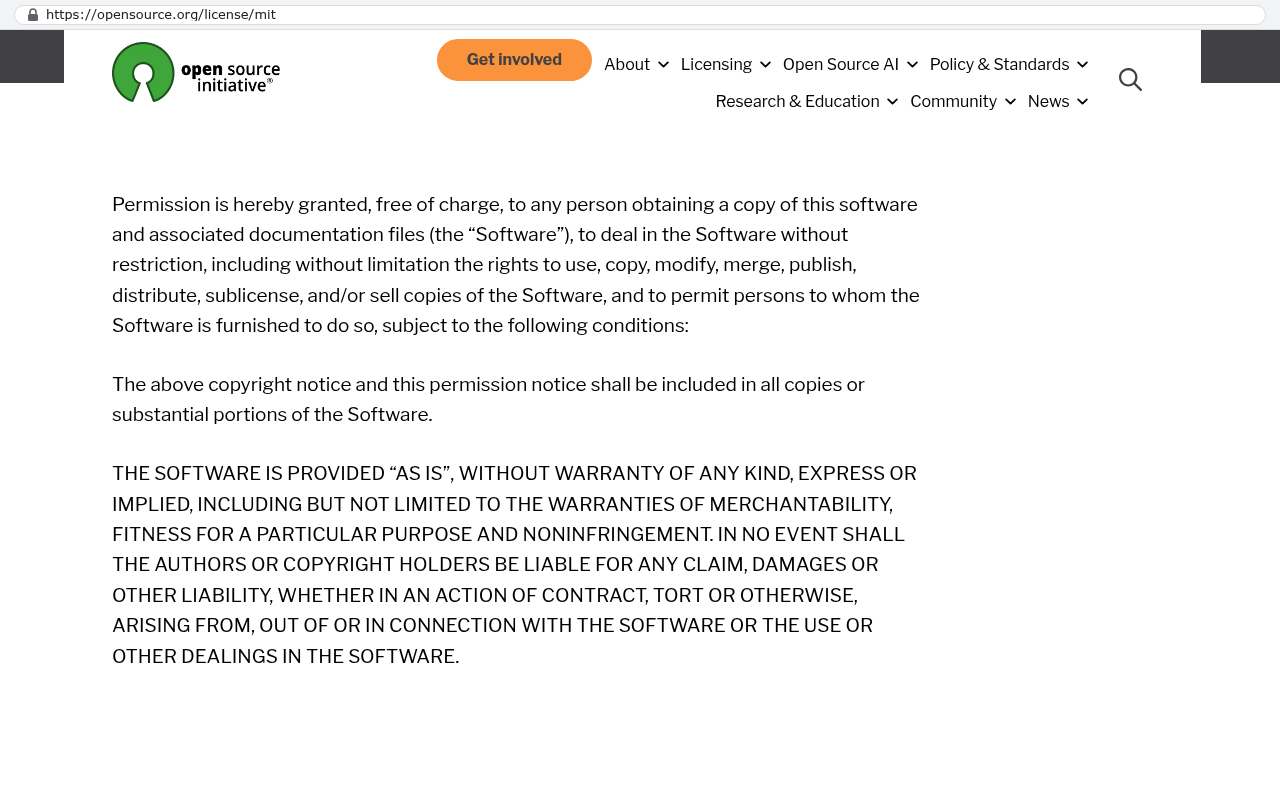
No modern software is written entirely from scratch. Your system is built on open source libraries, and the people who wrote those libraries own them. You get a licence. For the common ones, MIT and Apache 2.0, the licence is permissive and the obligations are tiny. You keep the copyright notices and you're done.
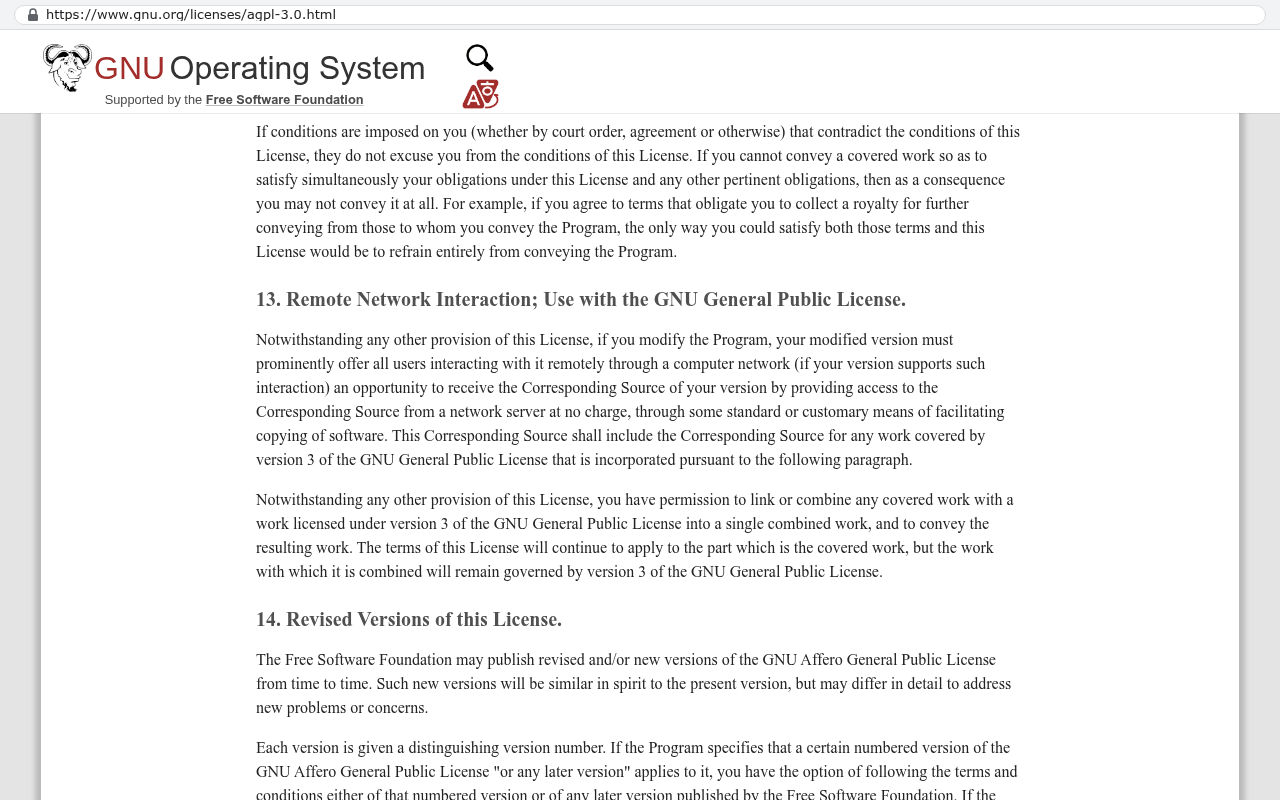
Copyleft licences are the ones to watch. GPL and especially AGPL require that if you distribute the software, or in AGPL's case even just run it as a web service that others use, you make your source code available under the same terms. If your system is purely internal, that's usually irrelevant. If you ever want to sell the system as a product, or offer it to clients as a hosted service, one AGPL component in the wrong place can force you to publish your own source code. This is a solvable problem when you catch it during the build and an expensive one when you catch it during due diligence.
The same applies to commercial components. A charting library, a PDF engine, a grid control. These are licensed per developer or per deployment and they stay owned by the vendor. Ask for a written list of every third-party component, its licence type, and whether it carries a recurring fee. A firm that does this properly already has the list generated automatically.
Then there are the services your system calls. Payment processing, email delivery, text messages, mapping, accounting APIs. You will never own those and you shouldn't want to. What you want is for those accounts to be in your name, so the relationship is yours and not your vendor's.
Your data is its own conversation
Code ownership clauses often say nothing about data, which is strange, because your data outlives the software. Customer records, job history, invoices, documents, photographs, signatures. Put a clause in that says your business data is yours, that the developer holds it only to provide the service, and that on request you get a complete export in a documented, usable format. Usable is the operative word. A proprietary backup file you can't open isn't an export.
This matters more when the system is hosted by the vendor. If it's in your own cloud account, you already hold the data. If it's in theirs, write down the export right, the format, the timeframe, and what happens to their copies afterwards. Also check whether any client contracts or regulations apply to that data, because healthcare, financial and government work all add requirements that need to be designed in rather than bolted on.
One more thing. Attachments and files are the hardest part of any migration. A twelve-year history of job photos and signed PDFs stored across a vendor's file service doesn't move with a copy and paste. It takes a scripted export that walks every record, pulls the files, and rebuilds the links on the other side. Agreeing in advance that this is included in handover saves a genuinely miserable month later.
What ownership doesn't actually buy you
This is the part that gets skipped in most articles on the subject, and it's the part that saves you money.
You still need someone who can run it
Owning the code doesn't make you capable of changing it. If the system is undocumented and built in an unusual way, the next developer's first three weeks go to reading. Ownership protects you from being held hostage. It doesn't remove the cost of maintenance, hosting, security updates and the occasional broken integration when a third party changes their API. Budget for ongoing care or the asset decays.
Ownership doesn't mean exclusivity of ideas
Your contract gives you the code. It doesn't stop the firm from building something similar for someone else, using the same patterns and the same general approach. You can negotiate a non-compete on similar work, but good firms charge for that, and honestly most businesses don't need it. Your advantage is in how your operation runs, not in the fact that you have a scheduling screen.
Owning a bad codebase is worse than renting a good product
If the build is poor, ownership just means you own the problem. Ownership is only worth fighting for when the thing being built is worth having. Judge the work, the documentation and the handover discipline first. The clause second.
Sometimes you shouldn't be building at all
If your need is standard, buy standard. Accounting, payroll, email and general CRM are mature, cheap and heavily regulated categories where a custom build is a bad trade. Custom earns its keep where your process is genuinely yours, where off-the-shelf forces you into workarounds, where per-seat pricing punishes you for growing, or where you're paying for five tools and a human to copy data between them. If a $60 a month product does the job, use it and spend your money elsewhere.
This isn't legal advice, and the ownership rules described here are US rules. Get a lawyer to read your development agreement before you sign it. An hour of a decent commercial attorney's time on an IP clause is the best money you'll spend on the whole project, and it's a fraction of what it costs to untangle ownership after a relationship goes bad.
The arithmetic, when ownership is the better deal
Here's how to compare honestly. Take the SaaS you'd otherwise renew and work out the five year total, not the monthly figure. Say you have 60 people on a field service platform at $90 per user per month. That's $64,800 a year. Add a $400 a month integration connector to push jobs into your accounting system and you're at $69,600. Most vendors raise prices each year, so apply a modest 7 percent annual uplift. Over five years that's roughly $400,000, and you own nothing at the end of it. Hire ten more people and the number climbs again.
Now put the build on the other side. One-off cost to design and build it, plus hosting, plus a realistic annual maintenance budget. Hosting for a system serving 60 internal users is normally modest, often a few hundred dollars a month on a mainstream cloud provider. Maintenance is the line people underestimate, so be generous with it. Then compare the two five year totals, and remember that in the build column the per-seat cost of your 61st employee is zero.
The arithmetic doesn't always favour building. With 8 users instead of 60 the SaaS total is small and the build rarely pays back. With a very standard process and no integration pain, the SaaS wins again. But at scale, with per-seat pricing and a process that doesn't fit the tool, the gap gets wide enough that it stops being a close call. Run the numbers with your actual headcount and your actual renewal quote before you decide either way.
The questions to ask before you sign
You don't need to be technical to run this conversation. Ask these, plainly, and listen to how quickly the answers come.
- Does the contract assign copyright to us, using the word "hereby", and not just the phrase "work made for hire"?
- Do your employees and subcontractors have agreements assigning their work to you, so you can pass it to us?
- Which pre-existing components of yours will be inside our system, and what licence do we get for them?
- Will the repository live in our organisation account from the first day of the project?
- Will the cloud, domain and third-party service accounts be opened in our name with our payment method?
- Can you produce a list of every open source and commercial component, with licence type?
- What exactly do we receive at handover, and will you walk a new developer through it if we ask?
- If we stop working with you tomorrow, what breaks, and what do we need from you to keep running?
The last question is the honest one. Watch for the firm that gets uncomfortable, because the discomfort tells you where the lock-in is.
If a firm will only offer a licence and won't budge, ask about source code escrow. A neutral third party holds a copy of the code and releases it to you if the firm goes out of business or breaches the agreement. It's a weaker protection than owning the code, and escrow copies go stale if nobody enforces regular deposits. Treat it as a fallback, never as the plan.
How we do it, and what to do next
At Black Badger we assign the code to the client and we set the accounts up in the client's name from the start. That's the whole philosophy of the firm. We used to be a platform partner and we left, because selling other people's licences and building systems people own outright are two different businesses. You keep the repository, the documentation and the keys. If you decide to work with someone else in three years, you can, and nothing about that is a problem for you.
If you're holding a draft contract right now, do three things today. Read the intellectual property section and find out whether it contains the word "assigns". Check who the domain is registered to. Ask your developer where the repository lives. Those three answers will tell you most of what you need to know about how much of your own software you currently control.
If you'd like a second pair of eyes on your current setup, or you're weighing a renewal against a build, you can book a free strategy session with us. We're in Clearwater and we work across Pinellas and Hillsborough counties.
Read this next
If this prompted you to check your own setup, read our piece on what a proper software handover package should contain. It turns the checklist above into something you can actually request in writing.
- What belongs in a software handover package, and how to verify you got it
- Per-seat pricing and the point where renewal stops making sense
- Buy, build or extend, a plain-English way to decide
- How to replace five disconnected tools without breaking the business
Frequently asked questions
If I paid for software development in full, do I automatically own the code?
No. Under US copyright law, the person who writes the code owns it automatically unless a signed document says otherwise. Paying in full does not transfer ownership. You may only have a license to use something you don't own. This is why a written assignment clause is critical in your contract.
Is a work made for hire clause enough to give me ownership of custom software?
Usually not. In US copyright law, work made for hire has a narrow meaning and only applies to nine listed categories. Custom business software is not on that list. A court could decide the clause does nothing. Good contracts include a present-tense assignment clause instead, such as all right, title and interest being irrevocably assigned to you.
What's the difference between owning code and having a license to use it?
Assignment means you become the owner and can modify, sell, or give away the code. A license means the firm stays the owner and grants you permission under stated terms. Licenses can be limited by user count, location, or entity, and can forbid modifications or changes. Licenses can also terminate when support ends.
What does real ownership of custom software actually include?
Ownership includes the repository, build instructions, environment settings, cloud accounts, domain, documentation and your data. Owning just a paragraph in a contract is not enough. You must also hold the accounts the system runs in and have access to everything needed to operate and maintain the software.
Do I own the open source and third-party components in custom software?
No. You will never own the open source and third-party pieces inside your system. Those stay owned by their creators. You only get a license to use them. Copyleft licenses can even block you from selling the product later, so understand what's included before signing.
What should I do if my development contract only mentions work made for hire?
Ask for an assignment clause to be added. A contract that only says all work shall be considered work made for hire without additional assignment language is a red flag and the most common ownership gap in small and mid-sized software agreements. Most honest firms will agree to add an assignment clause quickly.
Should I always insist on owning the code rather than licensing it?
Not always. If the firm has a genuine pre-existing product or framework and your project is customization on top of it, a license to the underlying platform is reasonable. What matters is owning everything specific to you, plus a perpetual, irrevocable, transferable license to the underlying pieces with the right to modify them.
Share this article
Keep reading
What software ownership actually means when the code was written with AI
Ownership isn't a checkbox, and AI assistance doesn't change what makes a system truly yours. Here's the spectrum, the handoff checklist, the maintenance bill, and the contract language to demand.
If this is your situation
Talk it through on a call
Thirty minutes over video with the person who would run the build. You talk, we ask questions, and you leave with a plain read on whether custom software makes sense for you. If the answer is that your current tool is fine and badly configured, you will hear that.
Who wrote this

David Verneuille
Founder, Black Badger Software Solutions
David Verneuille founded Black Badger after 18 years as a project manager and years implementing Smartsheet, monday.com, Wrike and Zoho for clients. He now builds custom systems that clients own outright, which is why the writing here is specific about where each platform fits and where it stops fitting.
Drafted with AI assistance, then checked, edited, and approved by a person before publishing. The facts, opinions, and recommendations are ours.