Skip to content
BlackBadger

Blog / Custom software

Why NetSuite implementations take longer than the sales cycle suggested

/ 9 min read

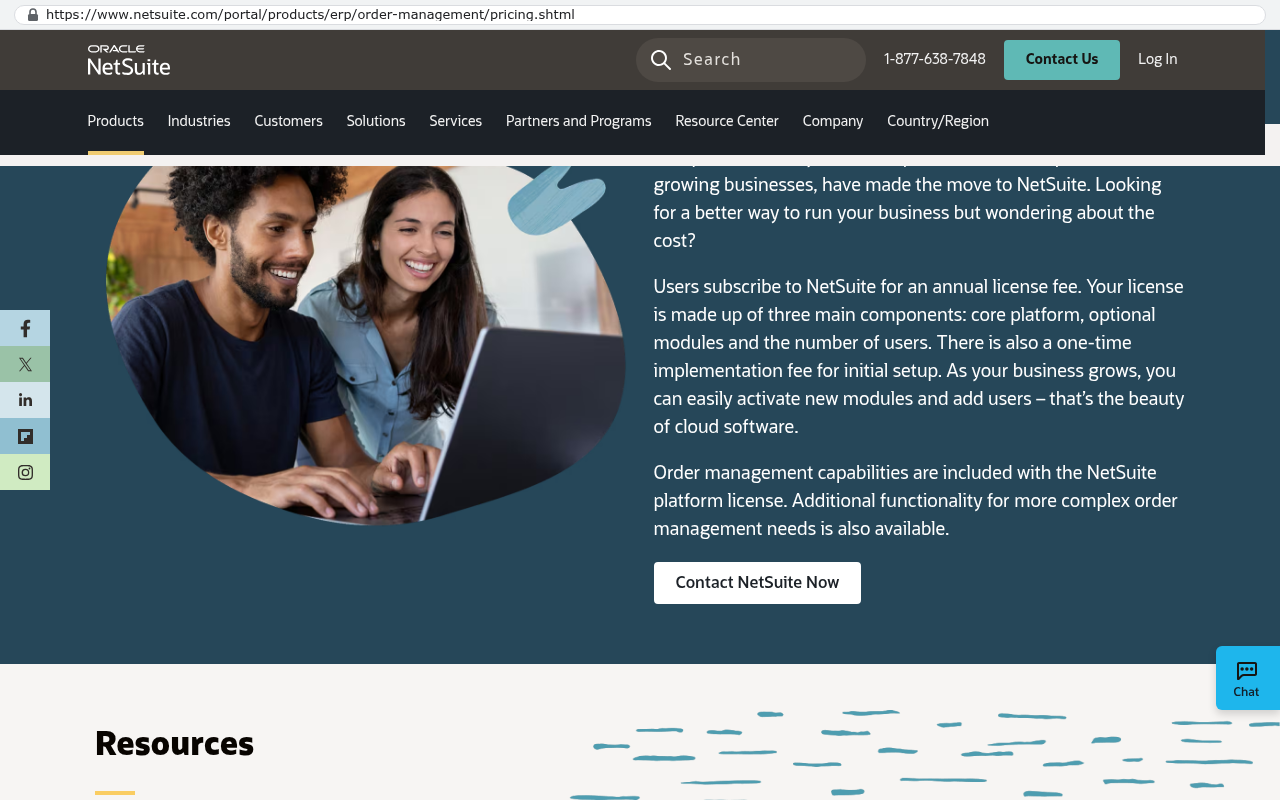
NetSuite order management pricing page showing the Oracle NetSuite logo and explaining that licensing has three components: core platform, optional modules, and number of users

TL;DR

NetSuite implementations consistently take far longer than sales cycles suggest because demos run on idealized data, scoping happens before real processes are understood, customization requires specialized expertise, and change management costs are rarely quoted upfront.

Key takeaways

  • Data cleanup is the single largest hidden cost in NetSuite go-lives because your messy real data must be reconciled by your internal team making judgment calls on thousands of records, consuming months of staff time beyond the initial sales pitch.
  • Scoping statements of work get signed during the sales cycle before implementation teams truly understand your business processes, causing later discoveries of custom requirements like specialized packing slips or multi-way billing to become expensive change orders.
  • NetSuite customization beyond basic configuration requires SuiteScript developers who are rare, expensive, and booked solid, making projects with custom scripts face weeks of delays for resource availability, development, testing, and iteration on edge cases.
  • Integrations with third-party systems like Shopify, 3PLs, and tax software take significantly longer than connector pages suggest because real-world data formats, API limitations, and business logic complications require substantial custom development beyond simple connections.
  • Honest implementation partners run paid discovery phases where they walk your floors and observe actual workflows before providing scopes that reflect real complexity and include weird but necessary requirements, resulting in higher initial quotes but more accurate timelines.

The demo was clean. The sales engineer clicked through order to cash in eleven minutes. Somebody said "most clients are live in about four months." Fourteen months later, you're still running parallel books in QuickBooks and arguing about item fulfillment records. That gap between the pitch and the reality isn't bad luck. It's structural, and once you see why, you can plan around it or decide NetSuite isn't the right fit at all.

I've worked inside NetSuite implementations from both sides. We used to hold platform partnerships and we let them go, because the economics of building custom systems changed. That gives me no reason to sell you NetSuite and no reason to trash it. NetSuite is genuinely good at some things. The timeline math is just broken, and here's what actually drives it.
The demo runs on data that doesn't exist yet

Every NetSuite demo runs in a sandbox account that's been polished for years. The chart of accounts is tidy. Items have clean SKUs. Customers have one address each. Nothing is duplicated.

Your data looks nothing like that. You have three spellings of the same vendor. You have items that were entered twice in 2019 and both versions have transaction history. You have customers who are also vendors. You have a chart of accounts that grew by accretion over eleven years and nobody remembers what account 6455 was for.

Data cleanup is the single largest hidden cost in a NetSuite go-live. It isn't technical work. It's your controller and your operations manager sitting with a spreadsheet, making judgment calls about a thousand records nobody wants to own. The implementation partner can't do it for you, because they don't know which of the three "Acme Industrial" records is the real one.

In practice, this phase eats months. Not because the import scripts are hard, but because your team already has full-time jobs and this is on top of them.

Ask any implementation quote to break out data migration hours separately, and ask who owns the cleanup decisions. If the answer is vague, assume your internal team absorbs it. Budget real staff time, not evenings and weekends.

Scoping happens before anybody understands your process

The statement of work gets signed during the sales cycle. That's the problem. At signing, the implementation team has spent maybe six hours with you across a few discovery calls. They've heard the tidy version of your business, the one you tell on calls.

The messy version surfaces in week five, during workshops. That's when someone mentions your top customer requires a custom packing slip with their part numbers, not yours. Or that field service techs record labor in a separate app and someone rekeys it into payroll every Friday. Or that you bill three different ways depending on contract type.

None of that was in scope. All of it is real. So you either drop it, which means a manual workaround forever, or you change order it, which adds time and money.

This is the mechanism behind almost every overrun. The scope wasn't wrong. It was incomplete, because nobody had done the discovery work yet when the number was written. Fixed-fee implementations make it worse, because the partner has a direct financial incentive to keep new discoveries out of scope.

What honest scoping looks like

Some partners handle this well. They run a paid discovery phase before quoting the build, and they walk your floor. They sit with your AP clerk for a morning. They come back with a scope that includes the weird stuff, and the number is higher than the sales conversation suggested.

That's a good sign, not a bad one. A quote that goes up after real discovery is a quote that's been tested against reality.

Customization in NetSuite is a specialty, not a setting

NetSuite is configurable to a point. Custom fields, custom records, saved searches, workflows. Your admin can do a lot without writing code, and that's a genuine strength of the platform.

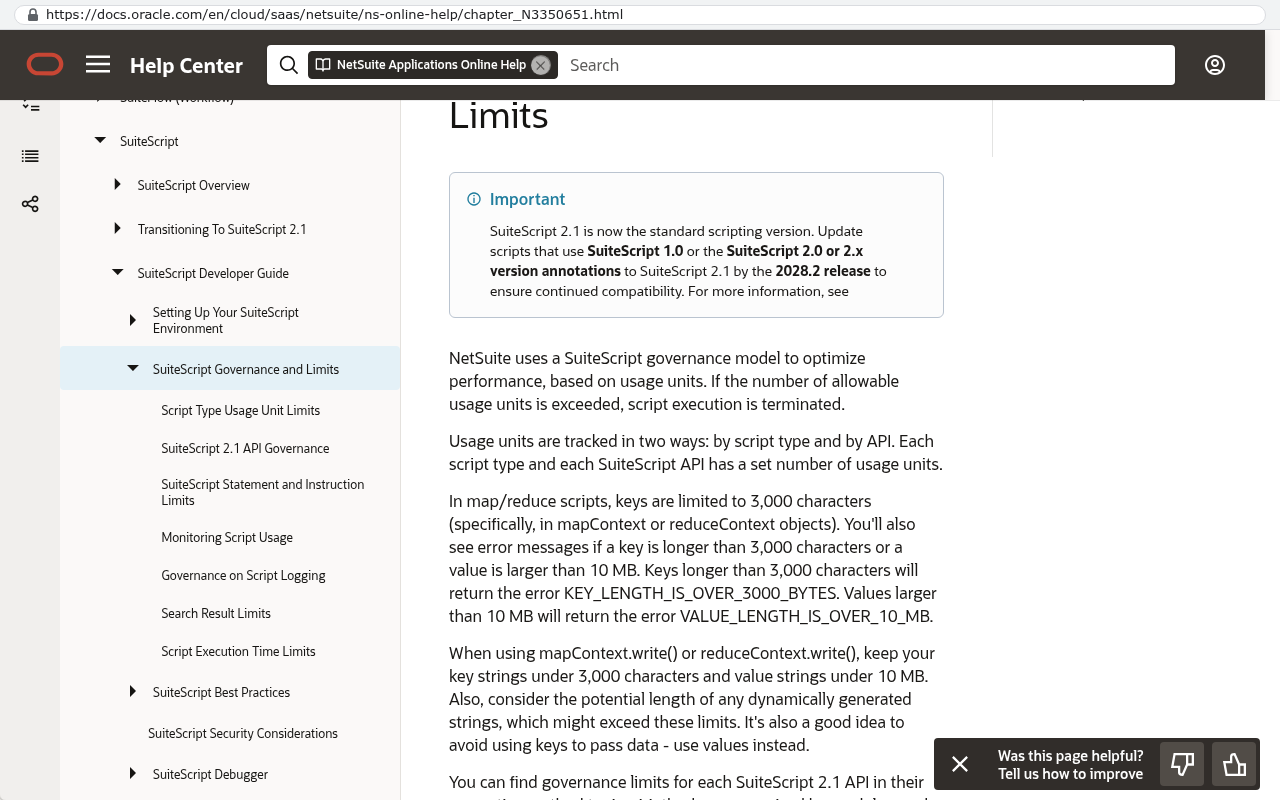
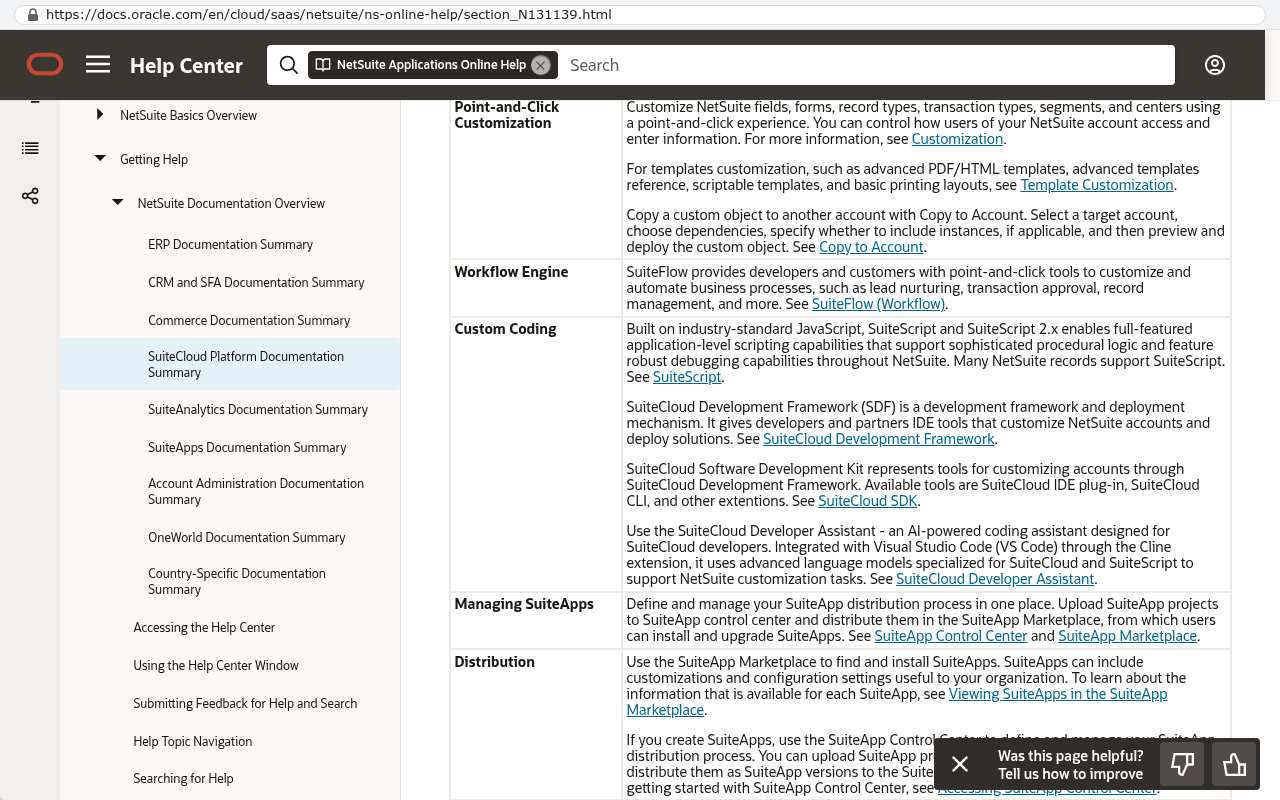
Past that point, you're in SuiteScript, which is NetSuite's JavaScript-based scripting language. It runs inside NetSuite's environment with its own rules about what can execute when. Governance limits cap how much work a script can do in a single run. Hit the limit and the script dies partway through. You then need to rewrite it to process records in batches.

NetSuite Help Center page titled SuiteScript Governance and Limits displaying documentation about usage units tracked by script type and API with governance caps on script execution
NetSuite documentation page on SuiteScript Governance and Limits showing usage unit limits and governance model for script execution. Source: docs.oracle.com/en/cloud/saas/netsuite/ns-online-help/chapter_N3350651.html
NetSuite Help Center documentation page displaying Custom Coding section that explains SuiteScript as JavaScript and SuiteScript 2.x scripting language for NetSuite with links to related resources.
NetSuite Help Center shows Custom Coding documentation describing SuiteScript and SuiteCloud Development Framework with multiple scripting options and capabilities. Source: docs.oracle.com/en/cloud/saas/netsuite/ns-online-help/section_N131139.html

Developers who know SuiteScript well are not common and not cheap. They're also usually booked. So when your project needs a script that recalculates commission across split territories, you wait for a resource, get a rough version, test it, find the edge case where a rep left mid-quarter, and iterate. Each cycle costs weeks.

The suite of add-on modules has the same shape. Advanced Revenue Management, WIP and Routings, Demand Planning. Each is a real product with its own setup requirements and its own consultant specialty. Turning one on isn't a checkbox. It's a subproject.

Integrations always take longer than the connector page implies

The integrations page lists your Shopify store, your 3PL, your Avalara tax engine, your bank. All supported. All with a logo. That page is technically true and practically misleading.

A connector moves data between two systems. It does not decide what your data means. Somebody still has to answer questions like these.

  • When Shopify sends an order with a discount code, does that hit revenue or a contra-revenue account?
  • If the 3PL ships partial, does NetSuite create a partial fulfillment or wait?
  • What happens when a customer exists in both systems with different addresses? Which one wins?
  • If the connector fails at 2am, who finds out and how?

That last one matters more than people expect. Error handling is where integration projects stall. The happy path works in a day. Making it survive a bad record, a timeout, or a duplicate order takes far longer, and skipping it means someone on your team becomes a full-time data janitor.

I've seen a two-week ecommerce integration turn into three months entirely because of returns. Nobody scoped returns. Returns touch inventory, revenue, tax, and the payment gateway all at once.

Write down every system that currently talks to another system, including the ones held together by a person copying a spreadsheet. That list is your integration scope. Most companies find twice as many connections as they expected.

Change management is the part nobody quotes

Your team has muscle memory. Your AR clerk can close a month in her sleep in the old system. In NetSuite, she'll be slower for a while, and slower feels like broken.

Training is usually scoped as a few sessions near go-live. That's not enough for a system this deep. NetSuite has multiple ways to do most tasks, and the right one depends on your configuration. Generic training teaches the platform. Your people need training on your build.

Then there's the productivity dip after go-live. It's real and it's temporary, but it lasts longer than anyone plans. Order entry slows down. Month-end close takes an extra week. Somebody discovers a report they relied on doesn't exist anymore and has to be rebuilt as a saved search.

None of this shows up in the project plan, but all of it shows up in your operations.

Where NetSuite is genuinely worth the pain

Balance requires saying this plainly. NetSuite earns its reputation in specific situations.

If you have multiple legal entities in multiple currencies and you need consolidated financials, NetSuite handles that well. Building multi-entity consolidation from scratch is serious work. If you're subject to revenue recognition rules under ASC 606 and your contracts are complicated, the revenue module is mature and auditors know it. If you need inventory across several warehouses with landed cost tracking, that's built in.

Those are hard problems. Buying a solution that already handles them is a rational choice, and I'd say so to a client.

Where NetSuite stops making sense is when your actual need is much narrower. Plenty of companies buy an ERP because they want one place to see jobs, invoices, and inventory. They end up paying for a general ledger engine designed for public-company complexity and then spend a year bending their process to fit it.

When a custom system is the better math

Run the arithmetic before you sign. NetSuite pricing has three parts: the base platform, per-user licenses, and modules. Every one of them escalates at renewal. You don't own any of it. If you leave, you get a data export and nothing else.

NetSuite order management pricing page showing the Oracle NetSuite logo and explaining that licensing has three components: core platform, optional modules, and number of users
NetSuite's order management pricing page explains that users subscribe to an annual license fee made up of three main components: core platform, optional modules, and the number of users, plus a one-time implementation fee. Source: www.netsuite.com/portal/products/erp/order-management/pricing.shtml

Now compare against a custom build. You pay to build it once, plus hosting and ongoing changes. You own the code. There's no per-seat charge when you hire ten people. There's no renewal negotiation where your price goes up because you grew.

The comparison used to favor NetSuite heavily, because custom software was slow and expensive to write. That's changed. AI-assisted development has compressed the build side substantially. A system that models your actual workflow, with your terminology and your rules, is now buildable at a cost that compares directly against a multi-year subscription.

The break-even is straightforward. Add your NetSuite subscription, implementation fees, and expected renewal increases over five years. Add the internal admin time. Compare that number to a build plus five years of maintenance. Do it honestly, including the risk that the custom build needs more changes than expected.

Before committing either direction, write a one-page description of the five workflows that actually run your business. If NetSuite handles four of them natively, buy it. If you'd be customizing three of the five, you're paying subscription prices for software you're building anyway.

Caveats on the custom path

Custom isn't automatically right, and I'd rather tell you now than after you've spent money.

You need audited financials with an unusual structure? A purpose-built general ledger is a heavy lift and auditors will ask harder questions. NetSuite has decades of audit precedent behind it. That's worth something real.

You need it working next month? A custom build has a design phase. Buying software you can turn on has genuine speed value when the deadline is fixed and external.

You have nobody internally who can make decisions? Custom builds require an owner who answers questions quickly. If your team can't commit that attention, you'll stall, same as a NetSuite project stalls.

And your custom system needs care. Hosting, security updates, occasional changes as your business shifts. That's smaller than a subscription, but it isn't zero.

What to do next

If you're mid-implementation and behind, don't panic. Get the remaining scope written down in detail, decide what's genuinely required for go-live, and push everything else to phase two. Most stalled projects are trying to launch too much at once.

If you haven't signed yet, do the discovery work before you commit. Map your processes yourself. Then evaluate NetSuite against that map instead of against a demo.

We're in Clearwater and we work with companies across Pinellas and Hillsborough counties who are staring at exactly this decision. If you want a straight read on whether your operation needs an ERP or needs a system built around how you already work, book a free strategy session at /contact. We'll tell you if buying is the better answer.

Questions

Frequently asked questions

Why do NetSuite demos show faster timelines than real implementations?

NetSuite demos run on polished sandbox data with clean records and no duplicates, while your actual business data contains vendor spelling variations, duplicate items with transaction history, and accounts nobody remembers. This gap between demo conditions and real data is structural, not a sign of problems. Data cleanup becomes the hidden cost that extends timelines significantly.

What is the biggest hidden cost in a NetSuite implementation?

Data cleanup is the single largest hidden cost. Your internal team must make judgment calls on thousands of records, like determining which vendor record is correct among multiple variations. Implementation partners cannot do this work because they don't know your business data. This phase typically consumes months because your staff already has full-time jobs and must handle cleanup on top of existing responsibilities.

Why does NetSuite scoping often change after implementation starts?

Scoping happens during the sales cycle when the implementation team has only done six hours of discovery calls. The messy version of your business surfaces later during workshops when you discover undocumented requirements like custom packing slips, separate labor tracking systems, or multiple billing methods. These discoveries then require scope changes or manual workarounds.

How much does SuiteScript customization typically cost and delay projects?

SuiteScript developers who know NetSuite's JavaScript-based scripting language well are scarce, expensive, and usually booked. When projects need custom scripts that hit governance limits, they must be rewritten to process records in batches. Each iteration cycle costs weeks as you test, find edge cases, and refine the solution.

Why do NetSuite integrations take longer than expected?

While connectors between systems like Shopify and 3PLs appear simple on the integrations page, they require extensive decision-making about data handling. Questions like which system's address wins for duplicate customers, how partial shipments are recorded, and what happens when connectors fail at 2am must all be answered. Error handling and edge cases consume far more time than the happy path.

What does honest NetSuite scoping include?

Honest scoping involves a paid discovery phase where the implementation partner walks your facility, observes your teams, and documents unusual processes before quoting. This approach surfaces the weird stuff and produces higher initial quotes than sales conversations suggested. A quote that increases after real discovery is actually a sign of quality, indicating the scope has been tested against reality.

When might a custom system be better than NetSuite?

We'd say the economics of a custom system have changed, and NetSuite is still genuinely good at some things. When timelines extend significantly due to data cleanup, scoping gaps, customization complexity, and integrations, you should evaluate whether a custom system's different math might serve your business better than enduring the structural delays NetSuite implementations create.

Read this next

Why platform implementations ask you to change your process

Platform consultants push you toward the standard workflow because that's what their incentives reward. Here's how to tell which of your processes deserve protection and which ones should go.

If this is your situation

Talk it through on a call

Thirty minutes over video with the person who would run the build. You talk, we ask questions, and you leave with a plain read on whether custom software makes sense for you. If the answer is that your current tool is fine and badly configured, you will hear that.

Book a strategy call

Who wrote this

David Verneuille

David Verneuille

Founder, Black Badger Software Solutions

David Verneuille founded Black Badger after 18 years as a project manager and years implementing Smartsheet, monday.com, Wrike and Zoho for clients. He now builds custom systems that clients own outright, which is why the writing here is specific about where each platform fits and where it stops fitting.

About Black Badger

Drafted with AI assistance, then checked, edited, and approved by a person before publishing. The facts, opinions, and recommendations are ours.

Related

More on custom software

Want this looked at properly?

An article can only go so far without knowing your systems. Book a strategy call, walk us through what is breaking, and you will get a straight read on whether custom software is the right answer.