
Most companies never decided to run on eight disconnected tools. It happened one reasonable purchase at a time. Sales needed a pipeline, so you bought a CRM. Delivery needed visibility, so you bought a project tool. Finance already had accounting software nobody wanted to touch. Each one made sense on its own. Together they create a tax that never shows up on a single invoice.
Why disconnected PM, CRM, and ERP tools quietly cost you more than any single subscription
/ 10 min read
TL;DR
Disconnected business tools accumulate one reasonable purchase at a time but create hidden labor costs through duplicate data entry, reconciliation work, and middleware fees that far exceed individual subscription prices.
Key takeaways
- Disconnected systems generate a permanent invisible labor cost buried in employee salaries because workers must manually rekey data across platforms multiple times for the same customer or job.
- Duplicate data entry across disconnected tools produces conflicting versions of truth that nobody trusts, forcing additional reconciliation work that creates nothing of value.
- Middleware and per-connector pricing often costs more than the actual tools being connected, making the supposedly cheap stack increasingly expensive at scale.
- A consolidated system where a job, customer, and invoice are unified into one record eliminates synchronization work entirely and enables faster decision making.
- Consolidating commodity functions like payroll and accounting is usually the wrong move because specialized tools in those domains often outperform all-in-one platforms.
- Questions that require pulling data from multiple disconnected systems stop getting asked because they take too long to answer, causing businesses to rely on instinct and opinion instead of data.
The short version
The subscription line items are the small part of the bill. The expensive part is the people work that exists only because your systems can't talk to each other. Rekeying, reconciling, chasing the real number, building the same report three times. That work is invisible in accounting because it's buried in salaries you already pay. Add connector fees and middleware on top, and the stack that looked cheap per seat gets expensive fast.
Key takeaways
- Disconnected tools create a permanent labor cost that no subscription line shows.
- Duplicate data entry isn't just slow, it produces two versions of the truth and neither is trusted.
- Middleware and per-connector pricing often cost more than the tool being connected.
- A single system where a job, a customer, and an invoice are one record removes sync entirely.
- Consolidation is the wrong call for commodity functions like payroll and accounting. Keep those.
How the patchwork gets built
Nobody sat in a room and designed this. A stack accumulates the same way a garage fills up. Sales picked a CRM in 2019 because the rep was persuasive and the trial was free. Two years later the operations manager got tired of spreadsheets and put the delivery schedule in a project tool. Then somebody added a form builder to capture leads from the website. Then a scheduling app, because the project tool's calendar was awful.
Each purchase solved a real problem for one team. None of them were evaluated against the whole. That's normal, and it isn't a management failure. Software gets bought by the department that feels the pain, and the department that feels the pain doesn't care what finance does with the data afterward.
The trouble starts when the business grows past the point where one person can hold the whole picture in their head. At twelve people, somebody just knows which job is which. At sixty, that person becomes a bottleneck and then they leave.
The rekeying tax
Watch a new customer move through a disconnected stack. The lead comes in on a web form. Somebody copies it into the CRM. When it closes, somebody creates a project in the PM tool and retypes the customer name, address, and scope. Purchasing enters the same job into the ERP or accounting system to raise a PO. Finance types the invoice details in again at the end. That's the same customer entered four times.
Every one of those hops is a chance to introduce an error. Not a hypothetical chance. A real one, because people fat-finger addresses and abbreviate company names differently. Now "Harbor Point LLC" and "Harbour Pt. LLC" are two customers, and your revenue-by-account report is wrong forever.
Then there's reconciliation, which is the work of finding out which system is lying. Somebody has to compare the project tool's hours against the payroll export. Somebody has to figure out why the CRM says twenty-two open deals and the forecast spreadsheet says nineteen. This work produces nothing. It just restores confidence in numbers you already paid to collect.
Want to size the problem honestly? For two weeks, ask three people to log every time they copy information from one system into another. Don't measure the time, just count the events. The count is usually the thing that shocks the owner.
Reports that arrive late and wrong
Siloed data does something worse than waste hours. It slows down decisions.
Say you want to know your true margin by job type. The revenue lives in accounting. The labor hours live in the project tool. The subcontractor costs live in an inbox and a spreadsheet. To answer one question you need three exports, a lookup formula, and an afternoon. By the time the answer exists, it's describing last month.
So people stop asking. That's the real damage. Questions that take an afternoon to answer just stop getting asked, and the business starts running on instinct and anecdote. The loudest project manager's opinion becomes the strategy, because nobody can produce a number fast enough to argue with it.
There's also the trust problem. When two systems disagree, everyone picks the number that supports what they already wanted. Sales quotes the CRM. Finance quotes the ledger. The meeting becomes a debate about data quality instead of a decision about the business.
The glue costs money too
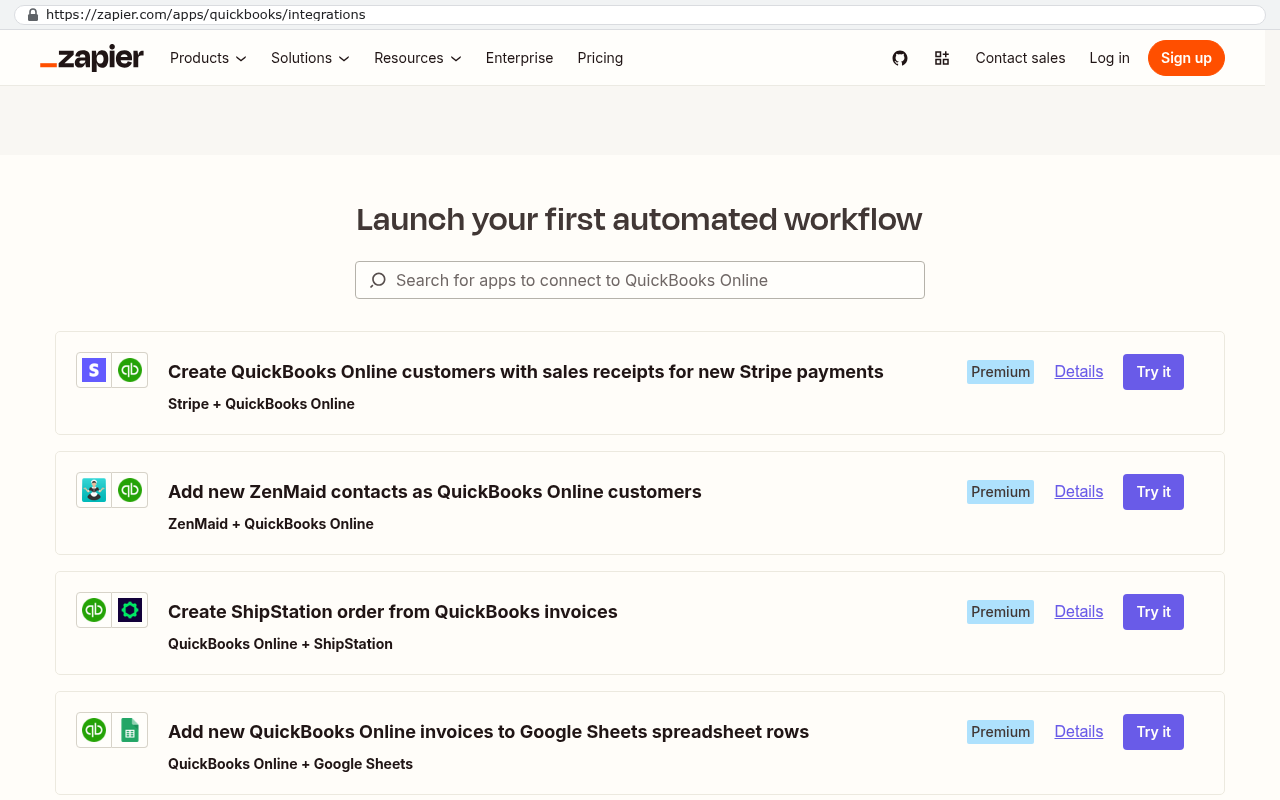
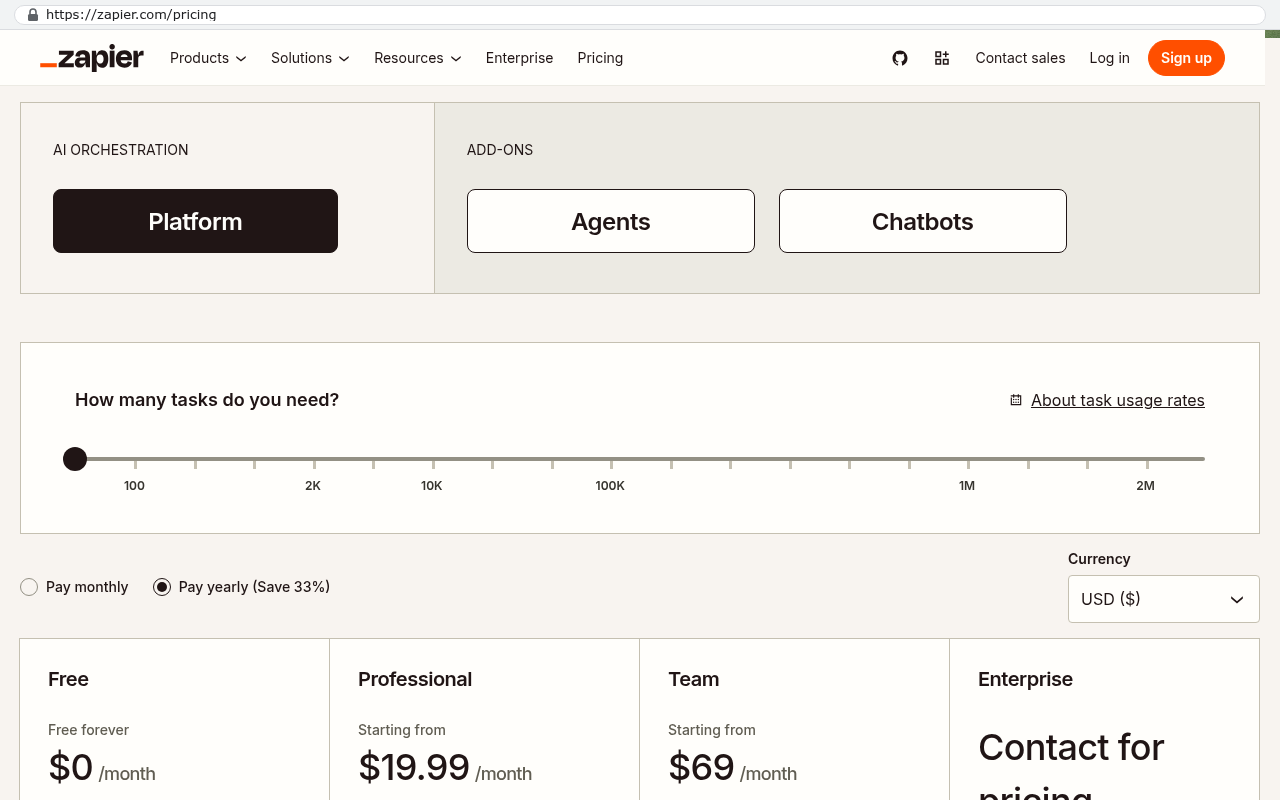
The standard answer to disconnection is a connector. Something like Zapier or Make, or a per-integration fee from the vendor. These tools genuinely work, and for small volumes they're a good buy. I've built plenty of automations that saved a client real time for a small monthly fee.
The pricing model is where it turns. Most middleware charges by task or operation, so the cost rises exactly as your business grows. A workflow that fires fifty times a month is trivial. The same workflow at eight thousand times a month moves you up two pricing tiers. Vendors also love charging for the integration itself. A CRM might be modest per user, and then the accounting connector is a flat monthly fee on top, plus the premium plan required to access it.
Then there's the fragility. Automations built one at a time by whoever was available become a web nobody documented. A field gets renamed in the CRM, three automations break silently, and you find out when a customer asks where their invoice went. There's no error dashboard anyone watches, because the person who set it up moved on.
Add up every line that exists purely to connect two other lines. Middleware subscriptions, premium plan upgrades bought only to access an API, per-connector fees, and the consultant who maintains them. If that total is a meaningful share of your software spend, you're paying rent on a problem instead of fixing it.
What one system actually removes
The argument for a custom system isn't that it does more. It's that it deletes whole categories of work.
When the quote, the job, the schedule, the purchase order, and the invoice are all views of one record in one database, there is no sync. Not faster sync. None. The project manager changes the scope and finance sees it instantly, because they're looking at the same row. Duplicate customers can't happen, because there's one customer table. Reconciliation disappears, because there's nothing to reconcile against.
Reporting changes character too. Margin by job type stops being an afternoon project and becomes a screen. Not because the software is clever, but because the numbers were never separated in the first place.
Here's the arithmetic that matters, and you should run it with your own numbers rather than mine. Take your total monthly spend across every operational subscription. Multiply by twelve. Then estimate the hours per week your team spends on re-entry, reconciliation, and report assembly, and multiply by a loaded hourly rate. That second number is usually larger than the first, sometimes by a lot. A custom system is a one-time build against an ongoing sum of both. It has real maintenance cost, and hosting, and it needs an owner. But it doesn't reprice itself every January, and it doesn't charge you more for hiring people.
A Tuesday that gets shorter
Picture a sixty-person specialty contractor. Every Tuesday morning, the operations coordinator spends about three hours building the week's job board. She exports open deals from the CRM, cross-checks them against the project tool, pulls material lead times from a purchasing spreadsheet, and emails a PDF to four supervisors. Anything that changes after 10am is wrong by lunchtime.
In a unified system, that job board is a live screen. It builds itself, because closing a deal creates the job, and the purchase order lives on the same record. The coordinator's three hours go back into actually chasing the two suppliers who are late.
That's one person and one recurring task. Multiply it across the estimator who retypes quotes, the bookkeeper who reconciles job costs, and the owner who waits until the eighth of the month to know how the seventh went.
Where consolidating is the wrong move
Plenty of tools should stay exactly where they are, and anyone telling you to replace everything is selling.
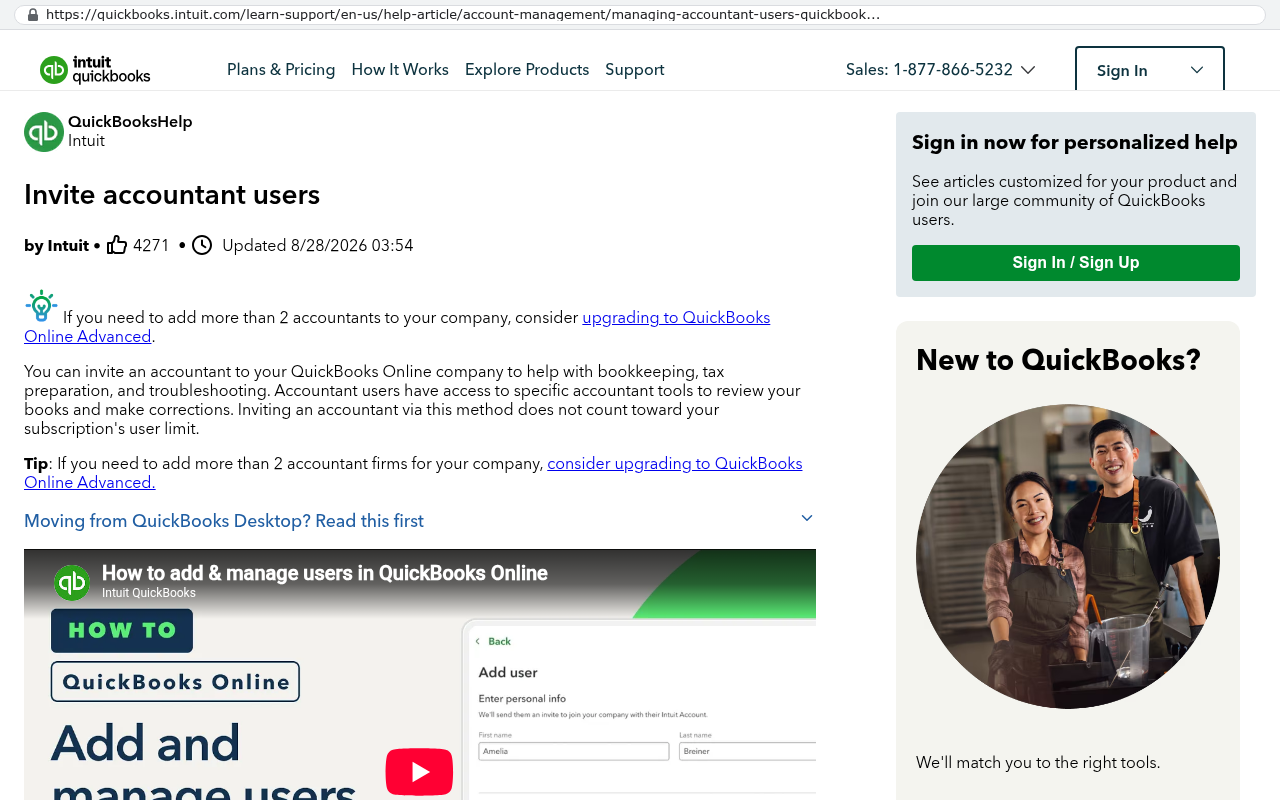
Don't rebuild accounting. QuickBooks or NetSuite handles tax rules, audit trails, and accountant access that you do not want to own. Don't rebuild payroll. Don't rebuild email, storage, or e-signature. These are commodity problems solved well by vendors who spend more on compliance than your whole IT budget. A custom system should talk to them cleanly and stay out of their way.
Be honest about the migration cost too. Moving twelve years of history out of a hosted tool takes a scripted export, not a copy and paste. Attachments, comment threads, and custom fields rarely come out in usable shape on the first pass. If your customers log into your current portal every day, moving them is a change management project, not a technical one.
And a custom system needs an owner. Not a big team, but someone accountable for hosting, backups, and the small changes the business will want. If nobody inside will hold that, a build becomes another orphaned asset in three years.
Start with the single worst handoff, not the whole stack. Replace the one place where information gets retyped most often, keep everything else running, and prove the pattern before you commit to more. Consolidation done in one big bang is how these projects fail.
What to do this week
Map the path one customer takes through your business, from first contact to final payment. Write down every system the record touches and every point where a human retypes something. Most owners find between four and seven retype points, and two of them are pure duplication that could go away with no new software at all.
Then price the glue. Then price the labor. If the total is uncomfortable, the question isn't whether to renew. It's whether you want to keep renting the workaround.
If you want a second set of eyes on that map, book a free strategy session and we'll walk through it with you.
FAQ
Isn't buying an all-in-one platform cheaper than building?
Often, yes, and you should check that first. All-in-one suites work well when your process looks like everybody else's. The trouble is that they force you to change how you work, and the bits that make you money are usually the bits that don't fit the template.
How do I know if the rekeying cost is really that big?
Count the events for two weeks, then estimate minutes per event. Multiply by loaded hourly cost, not salary. Most people underestimate by half because they forget the error correction that follows.
Can't we just hire someone to clean up the data instead?
You can, and it'll look fixed for about a quarter. Data quality problems come back when the cause is structural. If two systems both store the customer name, they'll drift apart again.
What happens if we build something custom and then want to change it?
You change it, because you own the code and the database. That's the main practical difference from a subscription. The constraint becomes budget and priorities, not what a vendor decided to put on the roadmap.
Do we have to move everything at once?
No, and you shouldn't. The workable pattern is to build the central record first, connect the existing tools to it, and retire them one by one as the new system proves itself.
Read this next
Custom software versus off-the-shelf: how to decide without guessing walks through the evaluation in more detail, including when buying genuinely wins.
Related articles
Questions
Frequently asked questions
What is the hidden cost of using disconnected PM, CRM, and ERP tools?
The hidden cost is permanent labor work that exists only because your systems can't talk to each other. This includes rekeying data, reconciling information, chasing accurate numbers, and building the same report multiple times. This work is invisible in accounting because it's buried in salaries you already pay, making the true cost much higher than subscription line items suggest.
Why does duplicate data entry create problems beyond just wasting time?
Duplicate data entry produces two or more versions of the truth, and neither is trusted. When the same customer information is entered into different systems, errors compound quickly. For example, slight variations like Harbor Point LLC versus Harbour Pt. LLC create separate customer records, making revenue-by-account reports permanently wrong and triggering endless reconciliation work.
How does disconnected data affect business decision-making?
When critical data lives in separate systems, answering basic business questions becomes so time-consuming that people stop asking them. For instance, calculating true margin by job type requires pulling three separate exports and spending an afternoon on lookups. By the time you have the answer, it describes last month, so decisions get made on instinct and anecdote instead of data.
Do middleware and connector fees actually save money?
Middleware charges by task or operation, so costs rise as your business grows. A workflow that fires fifty times monthly is cheap, but the same workflow at eight thousand times monthly moves you up pricing tiers. Add vendor connector fees, premium plan upgrades to access APIs, and consultant maintenance costs, and the total often exceeds what consolidation would cost.
What happens when automation breaks in a disconnected system?
Automations built one at a time by whoever was available become an undocumented web prone to silent failures. When a field gets renamed in one system, three automations may break without anyone noticing until a customer complains. There's no error dashboard to monitor because the person who set it up often moves on, leaving the system fragile and unreliable.
How should companies handle consolidation if they have disconnected tools?
Consolidation is the wrong call for commodity functions like payroll and accounting. Keep those systems. Instead, focus on consolidating where a job, a customer, and an invoice need to be a single record. This removes sync work entirely and prevents the data entry and reconciliation issues that plague disconnected stacks.
How does a patchwork of tools typically develop in companies?
The patchwork develops one reasonable purchase at a time, not from intentional design. Sales picks a CRM because it solves an immediate problem. Operations adds a project tool to replace spreadsheets. Someone adds a form builder, then a scheduling app. Each purchase makes sense individually, but together they create a hidden labor tax that nobody anticipated during procurement.
Read this next
When staying on your current platform is the right call
Custom software isn't always the answer. Here's the arithmetic, the warning signs, and the honest caveats that tell you whether to renew your platform or replace it.
If this is your situation
Talk it through on a call
Thirty minutes over video with the person who would run the build. You talk, we ask questions, and you leave with a plain read on whether custom software makes sense for you. If the answer is that your current tool is fine and badly configured, you will hear that.
Who wrote this

David Verneuille
Founder, Black Badger Software Solutions
David Verneuille founded Black Badger after 18 years as a project manager and years implementing Smartsheet, monday.com, Wrike and Zoho for clients. He now builds custom systems that clients own outright, which is why the writing here is specific about where each platform fits and where it stops fitting.
Drafted with AI assistance, then checked, edited, and approved by a person before publishing. The facts, opinions, and recommendations are ours.