What owning your software actually means when the code was written with AI assistance
/ 12 min read
TL;DR
Owning AI-assisted software depends entirely on your contract terms and what you receive at handoff, not on how the code was written, since ownership requires the source code, database structure, hosting credentials, documentation, and legal rights to modify it.
Key takeaways
Ownership of custom software means you must receive and control five specific things: the source code, database schema, hosting and domain credentials, written documentation, and the contractual right to hire any developer to modify it without permission.
US copyright law does not protect purely machine-generated code, but professional software development involves substantial human direction and decision-making that grants the buyer ownership through contract assignment, making copyright less relevant than contractual protections.
Your contract must explicitly assign all intellectual property rights to your company and include a dated handoff package with repository access, credential lists, and architecture documentation before you pay the final invoice.
AI-assisted code quality depends heavily on developer review and testing practices, so you should ask vendors specifically how they validate, test, and document code before accepting delivery.
SaaS platforms provide only data export capabilities with no access to source code, database schema, or system behavior modification, making them fundamentally different from owning a custom system built for your business.
Owning a system is completely different from maintaining a dependent vendor relationship, and you should verify you can transfer your project to another developer in another state using only the handoff materials.
You're about to pay for a custom system. The developer mentions they use AI tools to write parts of the code. And now you're wondering something you probably haven't said out loud: do I still own this thing?
Short answer, yes. But the reason you own it has nothing to do with how the code got typed. It has to do with what's in your contract and what's in your hands on day one after launch. Let's go through both.
TL. DR: AI-assisted code is yours if your contract assigns it to you and your developer hands over the repository, the database, the hosting credentials, and the documentation. The AI is a typing tool. Ownership is a paperwork and handoff question, and it's the one you should be grilling vendors about.
Key takeaways
Ownership means five things you can hold: the source code, the database structure, the hosting and domain credentials, written documentation, and the legal right to hire anyone else to change it.
US copyright law doesn't protect purely machine-generated work with no human authorship. In practice, real software involves heavy human direction, review, and editing, which is why the contract matters more than the tool.
Your agreement needs explicit assignment language, repository transfer, and a dated handoff. Verbal assurances are worth nothing when a developer goes quiet.
Owning a system and owning a vendor relationship are different. You want the first. The second is a rental with extra steps.
AI-assisted code can be sloppy if nobody reviews it. Ask how the work gets reviewed, tested, and documented before you sign.
SaaS gives you a data export and nothing else. No code, no schema, no ability to change behavior. That's the real comparison.
What ownership actually consists of
Most people think ownership is a line in a contract. It's five tangible things, and if you're missing any one of them you don't really own the system.
You need the source code, which is the human-readable instructions that make the software work. You need the database schema, which is the blueprint of how your data is organized. You need the hosting credentials, meaning the logins to the servers and services where the system runs. You need documentation that explains how the pieces fit together. And you need the contractual right to hire literally anyone to modify it, with no permission required from the original developer.
Miss the credentials and you own a codebase you can't deploy. Miss the schema documentation and a new developer spends weeks reverse-engineering your own data. Miss the assignment clause and you've got a license, not ownership, even if you paid full price.
Here's a test that cuts through the sales talk. Ask your vendor: if I fired you tomorrow and hired a shop in another state, what exactly would I send them? A good answer is a repository link, a credential list, an architecture document, and a phone call to answer questions. A bad answer is vague.
Is AI-assisted code legally yours?
This is the question buyers are nervous to ask, so let's handle it plainly.
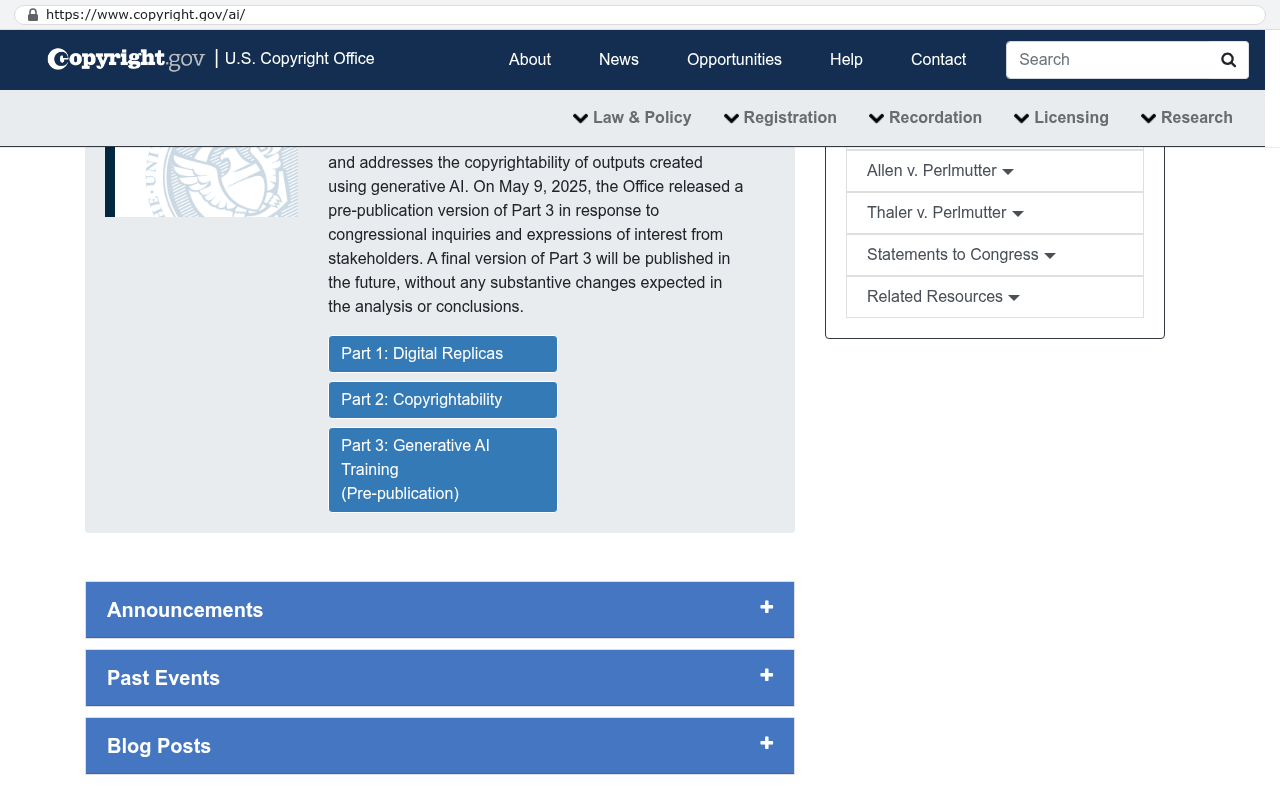
The US Copyright Office has said that purely machine-generated output, where a human just typed a prompt and accepted whatever came back, doesn't get copyright protection. There's no human author. That's the concern hiding behind the question.
The US Copyright Office AI guidance page shows information about generative AI outputs and copyrightability with links to detailed sections on digital replicas and copyright training Source: www.copyright.gov/ai
But that's not how professional software gets built. A developer using an AI assistant is making hundreds of decisions per hour. What the system should do. How the data should be structured. Which suggestion to accept, which to rewrite, which to throw out. What to name things. How errors get handled. The AI is closer to an extremely fast autocomplete than an author.
Practically speaking, this matters less than people think. Copyright protection stops other people from copying your code. It has almost nothing to do with whether you, the buyer, can use, modify, host, and control the system you paid for. Those rights come from your contract, not from copyright registration.
Think about it this way. Nobody asks whether their logo is legally theirs because the designer used Illustrator. The tool isn't the author. The contract says who owns the output.
There is one real risk worth naming. AI coding tools are trained on public code, some of it under licenses that impose conditions on reuse. A sloppy shop that accepts large blocks of generated code without review could introduce licensed code into your system. Ask your vendor directly how they handle this. A competent team reviews everything that lands in your codebase and can tell you which third-party libraries they used and under what license.
What has to be in the contract
Verbal promises evaporate. Get this in writing before work starts, not after.
You want explicit assignment of all intellectual property in the deliverable to your company, effective on final payment. The phrase "work made for hire" is common, but it's narrow under US law and doesn't automatically cover contractor work. So the contract should also include a plain assignment clause that transfers ownership outright. Belt and suspenders.
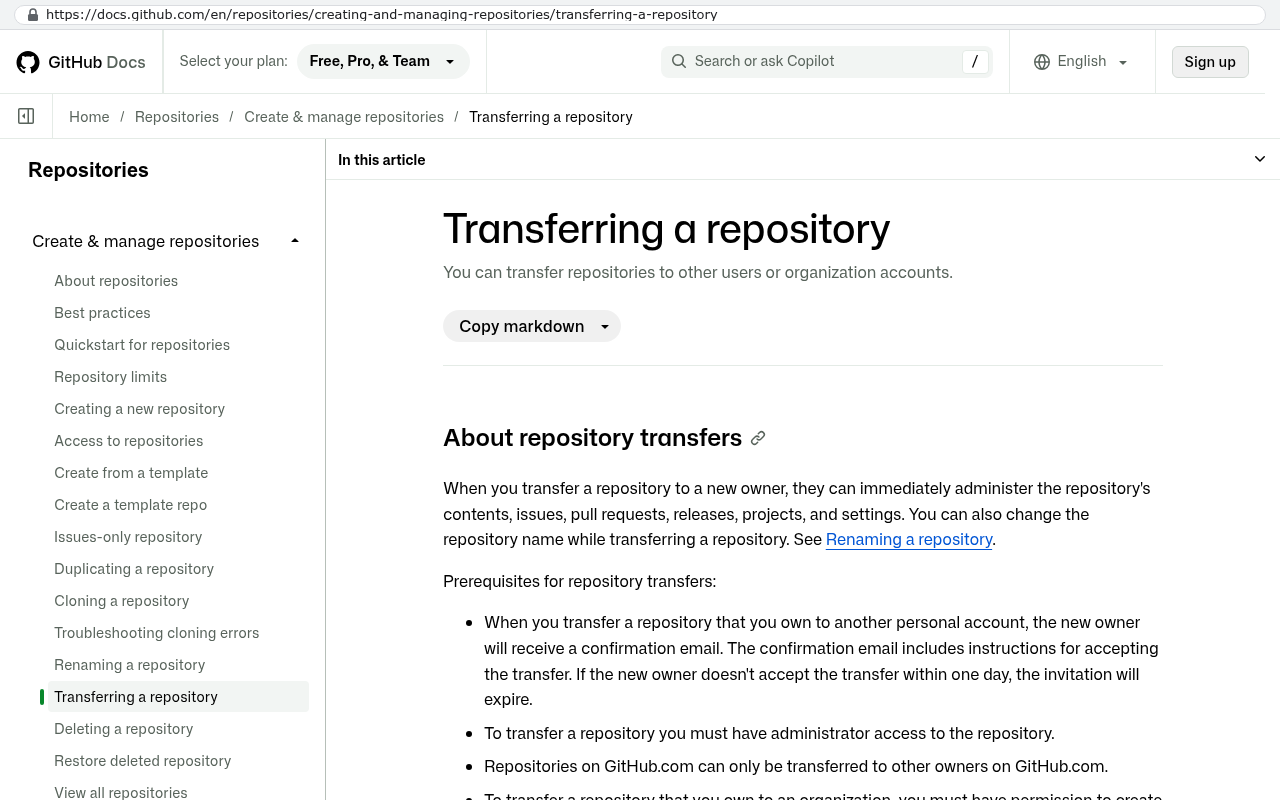
You want repository transfer spelled out. Name the platform, say the repository gets transferred to your organization account, and set a date. "We'll give you the code" is not a clause. "The repository transfers to Client's GitHub organization within five business days of final payment" is a clause.
GitHub Docs page on Transferring a repository explains that repositories can be transferred to other users or organization accounts with prerequisites and confirmation requirements listed. Source: docs.github.com/en/repositories/creating-and-managing-repositories/transferring-a-repository
You want deployment access named. Hosting account, domain registrar, database, email service, payment processor, and any third-party API keys. List them. The most common trap isn't malice. It's that a developer set up your hosting under their own account three years ago and never thought about it again.
You want a documented handoff as a deliverable, not a favor. If it's not a line item, it doesn't happen.
And watch for carve-outs. Some contracts assign the custom work but retain ownership of "vendor frameworks" or "reusable components." That can be legitimate, and it can also be a leash. If a vendor retains a component your system can't run without, you don't own a working system. Ask what happens to that license if you stop paying them.
Owning a system versus owning a relationship
A lot of buyers think they've bought a system when they've really bought a relationship with a developer who's nice to them.
The difference shows up on the worst day. Your developer gets sick, takes a full-time job, retires, or just stops answering. If you own the system, that's a bad week. You hand the repository and credentials to a new team, they read the documentation, and they pick it up. If you own a relationship, that's a crisis. Your business runs on software nobody can access or change.
We've seen how this plays out in the market. The pattern is always the same. Nobody planned for the developer to vanish, so nobody asked for the handoff package, so the handoff package doesn't exist.
Owning the system doesn't mean you'll never need a developer again. You will. Software needs maintenance the way a building needs a roof. What ownership changes is that you get to choose which developer, at what price, on what timeline. That's power, and it's most of what you're paying for.
Run a fire drill. Six months after launch, ask a different developer to clone your repository, follow the setup documentation, and get the system running locally on their machine. Pay them for the two hours. If they can't do it from the docs alone, your handoff is incomplete and you've found out while it's still fixable.
Code quality is where AI assistance earns or loses your trust
AI tools write code fast. Fast and good aren't the same thing, and this is the honest caveat about AI-assisted development.
Left unsupervised, these tools produce code that works today and confuses everyone later. They'll duplicate logic in four places instead of writing it once. They'll invent inconsistent naming. They'll hallucinate a function that doesn't exist in the library version you're actually using. They're confidently wrong on a regular basis.
None of that is a reason to avoid AI-assisted work. It's a reason to ask about process. What you want to hear is that a human reviews every change before it lands, that there are automated tests covering the parts of the system where a bug would cost real money, and that the code follows a consistent structure a new developer could learn in an afternoon.
The practical questions to ask a vendor:
Who reviews code before it goes live, and what are they looking for?
What's covered by automated tests, and what isn't?
Are you using standard, well-known libraries, or unusual ones a future team would have to learn?
Can you walk me through the folder structure and explain why it's organized that way?
You don't need to understand the answers technically. You need to hear that there are answers. A vendor who gets defensive about review practices is telling you something.
What a real handoff package contains
A proper handoff is boring and specific. That's the point.
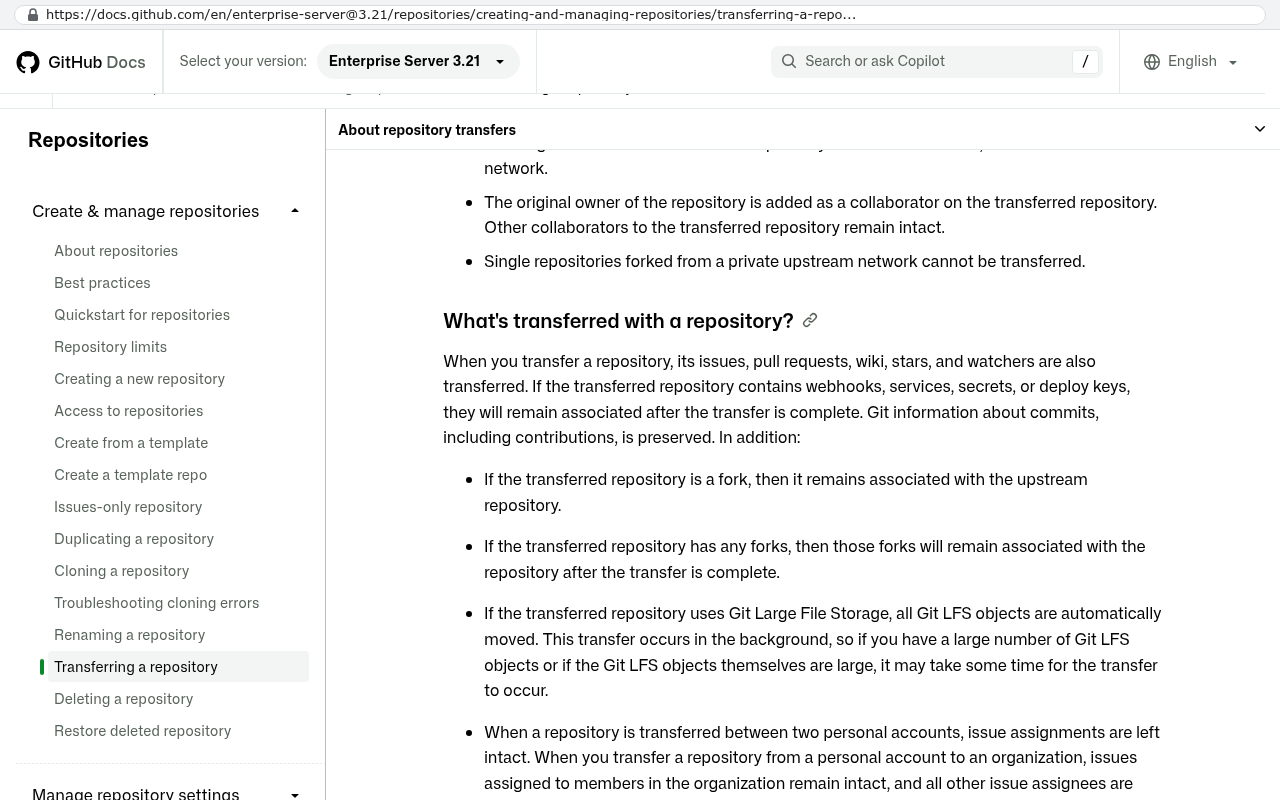
It includes the repository with full commit history, transferred to an account you control. Full history matters because it lets a future developer see why things changed, not just what the code says today. It includes an architecture overview in plain language that explains what the major parts do and how they talk to each other. It includes a setup guide detailing how to get the system running on a new machine and how to deploy an update.
GitHub Docs Enterprise Server 3.21 page about repository transfers showing what content is transferred including commit history and git information. Source: docs.github.com/enterprise-server@3.21/articles/about-repository-transfers
It includes a credential inventory listing every account, service, and key the system depends on, with the owner of record named. It includes the database schema documentation. It includes a list of third-party services with their licenses and renewal dates, so nothing expires and surprises you. And it includes recorded walkthroughs, because a thirty-minute screen recording of a developer explaining the tricky parts is worth more than fifty pages of prose.
The test for all of it is the same. Could a competent developer who's never met you pick this up and be productive inside a week? If yes, you own the system. If no, you own a very expensive mystery.
Compare that to what SaaS gives you
Here's the arithmetic that actually matters, and it's not about the monthly fee.
Under a typical SaaS agreement, you own your data and nothing else. You get an export button, usually producing spreadsheets. You don't get the code. You don't get the schema. You don't get the workflow logic. You can't change how the software behaves, only which settings you toggle. Your price can go up at renewal and your answer is yes or migrate.
Consider a 40-person operations team paying 65 dollars per seat per month. That's 31,200 dollars a year, before the integration add-ons and the annual uplift. Over five years, at a modest 7 percent yearly increase, you're near 180,000 dollars. At the end of it you own the same thing you owned on day one. A CSV file.
A custom system flips that. You pay to build, you pay less to maintain, and the asset is on your books. If a maintenance vendor gets expensive, you switch. Nobody can raise your rent on software you own.
That said, custom isn't automatically the answer. If you need email, accounting, or payroll, buy it. Those are solved problems with strong products and real economies of scale. Custom earns its keep when the software has to match how your business specifically works, when per-seat pricing punishes you for growing, or when you're paying three tools to do one job because no single product fits.
The caveats nobody should skip
Ownership isn't free and it isn't magic.
You own the maintenance too. Dependencies need updating. Security patches need applying. Somebody has to hold that responsibility, and if nobody does, an owned system rots faster than a rented one.
You own the hosting bill, which is usually small, and the operational responsibility, which isn't. Backups, uptime monitoring, and access control become your call.
Owning the code doesn't automatically make it good. A badly built system you own is still a badly built system. Ownership protects your options, and that's it. Quality comes from the build process.
And a custom build has a real up-front cost that a monthly subscription hides. The math works over a multi-year horizon. If you're not sure your process will still look like this in eighteen months, rent first and buy once the requirements settle.
FAQ
Does using AI to write code make my software less valuable?
No. What makes software valuable is whether it does the job, whether it's maintainable, and whether you control it. A buyer in a due diligence process cares about those three things. They won't ask which editor the developer had open.
Can my developer reuse the code they wrote for me on another client project?
Only if your contract lets them. Read the reusable components clause carefully. Generic utilities being reused is normal and fine. Your specific business logic walking out the door to a competitor is not. Say so in writing.
What if I don't have a technical person to receive the handoff?
Hire an independent developer for a few hours to review the handoff package on your behalf. It's cheap insurance. They'll tell you in an afternoon whether what you received is complete.
Do I need to escrow the source code?
If you have the repository in your own account and the credentials in your own password manager, escrow is redundant. Escrow is a workaround for vendors who won't give you the code. Just get the code.
How do I know the AI didn't copy someone else's code into my system?
Ask your vendor what licenses their dependencies use and whether they scan for license compliance. A professional shop can produce that list. It's also worth putting a warranty clause in the contract stating the deliverable doesn't knowingly infringe third-party rights.
What to do next
Pull out your current vendor agreement and look for three things. An assignment clause naming your company. A named repository transfer. A handoff deliverable with a date. If any of them is missing, that's your next conversation, and it's easier to have before the next invoice than after a dispute.
Read this next: our breakdown of what to look for in a custom software contract before you sign it.
Related articles
Custom software versus SaaS subscriptions, with the five-year math
What a complete software handoff package should include
Questions to ask a development shop before you hire them
Questions
Frequently asked questions
Does using AI to write code make my software less valuable?
No. Ownership depends on your contract and what's handed over, not how the code was written. The AI is a typing tool similar to Illustrator for designers. What matters is whether you receive the source code, database schema, hosting credentials, documentation, and the legal right to modify the system with any developer you choose.
What five things do I need to actually own my custom software?
You need the source code, the database schema showing how your data is organized, hosting and domain credentials to access where the system runs, written documentation explaining how everything fits together, and the contractual right to hire anyone to modify it without permission from the original developer. Missing any one means you don't truly own the system.
Is AI-assisted code legally mine if a developer built it?
Yes, if your contract assigns it to you. The US Copyright Office doesn't protect purely machine-generated output, but professional software involves heavy human direction and editing by the developer. Your rights come from the contract, not copyright registration. The tool used doesn't determine ownership any more than a designer's use of Illustrator determines who owns a logo.
What should my contract say about transferring the repository?
Be specific. Don't accept vague promises like 'we'll give you the code.' Your contract should state exactly which platform, that the repository transfers to your organization account, and set a date. For example: 'The repository transfers to Client's GitHub organization within five business days of final payment.' Verbal assurances disappear when a developer goes quiet.
What's the difference between owning a system and owning a vendor relationship?
Owning the system means you have full control and can switch developers anytime. Owning a vendor relationship is really a rental with extra steps where you're locked into the original developer. You want actual ownership, which requires having all the technical assets and contractual rights to operate independently.
Can my developer reuse code they wrote for me on another client project?
Only if your contract allows it. Your agreement should include explicit assignment of all intellectual property in the deliverable to your company. Watch for carve-outs where vendors retain ownership of 'reusable components' or 'vendor frameworks.' These can limit your control and create obligations to the developer.
How do I know the AI didn't copy someone else's licensed code into my system?
Ask your vendor directly how they handle this risk. A competent team reviews everything generated before it enters your codebase and can tell you which third-party libraries they used and under what license. AI tools are trained on public code, some under restrictive licenses, so review and documentation matter significantly.
Cancel a SaaS subscription and your data doesn't vanish, it gets locked behind a login. Here's what an export really gives you, what never comes out, and when owning the system is cheaper.
If this is your situation
Talk it through on a call
Thirty minutes over video with the person who would run the build. You talk, we ask questions, and you leave with a plain read on whether custom software makes sense for you. If the answer is that your current tool is fine and badly configured, you will hear that.
David Verneuille founded Black Badger after 18 years as a project manager and years implementing Smartsheet, monday.com, Wrike and Zoho for clients. He now builds custom systems that clients own outright, which is why the writing here is specific about where each platform fits and where it stops fitting.
AI coding assistants have cut the hours on the predictable parts of a software build, which changes the math on building versus renewing. Here's what got cheaper, what didn't, and where the risk sits.
AI coding tools cut the cost floor on custom software, putting ownership within reach of mid sized companies. Here's what actually got cheaper, what didn't, and how to run the math.
AI tooling made the mechanical parts of building software cheaper, but not the thinking parts. Here's how that shifts the build versus buy math, and where subscribing still wins.
ClickUp is a powerful project management tool that helps organize tasks, manage teams, and simplify workflows. While it's accessible via a web browser, ClickUp also offers a desktop app for Windows, Mac, and Linux.
Internet connectivity issues can hinder productivity and disrupt workflows. However, ClickUp offers an offline mode that enables you to continue working on your tasks and projects, even when you're disconnected from the...
Want this looked at properly?
An article can only go so far without knowing your systems. Book a strategy call, walk us through what is breaking, and you will get a straight read on whether custom software is the right answer.