Skip to content
BlackBadger

Blog / Project management

AI assisted development is closing the cost gap between custom software and saas

/ 11 min read

QuickBooks Online pricing page showing Simple Start at $19 per month, Essentials at $42.50 per month, Plus at $70 per month, and Advanced at $170 per month, with feature comparisons and Choose plan buttons for each tier

TL;DR

AI coding tools now handle the repetitive aspects of custom software development, reducing build costs significantly and making custom systems financially viable for smaller businesses where SaaS subscriptions used to be the only option.

Key takeaways

  • AI excels at generating the scaffolding and boilerplate code that historically consumed most custom software budgets, while experienced engineers still must review, validate, and customize the business-specific logic that makes up roughly fifteen percent of a typical system.
  • Custom software now reaches financial breakeven much faster than a decade ago because the upfront build cost has dropped substantially while SaaS subscription costs continue to rise annually, making the total cost of ownership favor custom solutions over multi-year periods.
  • AI generated code has genuine failure modes including security vulnerabilities, missed edge cases, and confident but incorrect outputs, which means human review from experienced engineers remains mandatory and non-negotiable regardless of how capable the tools become.
  • Commodity business functions like email, accounting, and other standardized needs should still use SaaS products because building custom versions of these functions wastes resources that should focus on competitive advantages specific to your business.
  • The old barrier to custom software was primarily the high upfront cost and perceived risk, which pushed most businesses toward rented solutions despite having to work within someone else's system design and maintain workarounds to bridge gaps.

The old math said custom software was for big companies. Everyone else rented. That math has shifted, and it shifted fast. AI coding tools have cut the hours needed to build the ordinary parts of a business system, and the ordinary parts were always most of the cost.

This isn't a claim that software builds itself now. It doesn't. But the gap between "pay a subscription forever" and "own the thing" is narrower than most owners assume, and the assumptions people are working from are about four years out of date.

TL. DR: AI tools handle the repetitive 60 to 70 percent of a custom build, which drops the hours and therefore the cost. Custom software now makes financial sense at much smaller scale than it used to. It still doesn't make sense for commodity needs like email or accounting, and AI does not remove the need for experienced engineers reviewing every line.
Key takeaways

  • The expensive part of custom software was never the clever part. It was the plumbing, and AI writes plumbing well.
  • A system that would have needed a long build a decade ago can now be scoped much smaller, which changes who can afford one.
  • Rented software costs rise every year. An owned system's cost curve flattens after launch.
  • AI generated code has real failure modes, mostly around security, edge cases, and confident nonsense. Human review is not optional.
  • Custom still loses to SaaS for commodity functions. Don't build your own email client.

What AI actually changed about building software

Picture a typical business system. A quoting tool, say, for a company that sells installed equipment. Sales reps build quotes, managers approve them above a threshold, approved quotes become jobs, jobs get scheduled, and someone bills at the end.

Maybe fifteen percent of that build is genuinely specific to the business. The approval rules, the pricing logic, the way this company handles change orders. The other eighty five percent is the same scaffolding every business system needs. Login screens. User permissions. Forms that validate input. Tables you can sort and filter. Reports that export to Excel. Audit trails. Password resets. Error handling.

That scaffolding used to eat most of the budget. A developer wrote it by hand every time, on every project, and charged for every hour. Now an experienced engineer describes what's needed and AI produces a working first draft in minutes. The engineer reads it, fixes what's wrong, and moves on.

The speedup isn't uniform. On boilerplate it's dramatic. On the fifteen percent that makes your business yours, it's modest. AI doesn't know that your Tampa branch invoices differently because of a legacy contract from 2011. Somebody has to find that out, understand why, and encode it correctly.

The arithmetic, ten years ago versus now

Here's how the decision used to look. A mid-sized distributor wants a system to replace a tangle of spreadsheets and a CRM that doesn't fit. Ten years ago, a build like that meant a long engagement with a team of developers. The number was big enough that the CFO stopped the conversation in the first meeting.

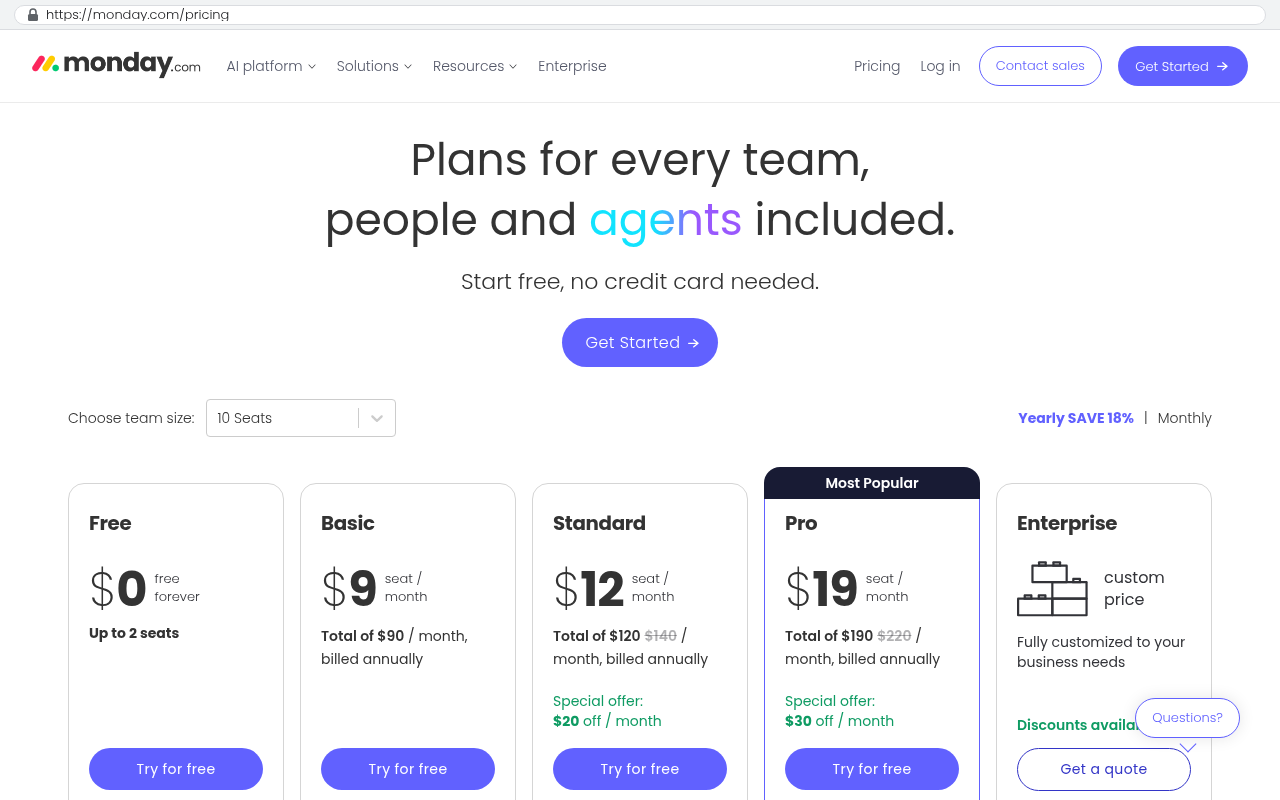
So the company bought SaaS instead. Say forty seats on monday.com's Pro plan, which monday.com's pricing page bills per seat per month. The subscription was affordable monthly and painful annually. Then came the implementation partner, the connector to their accounting system, the two admins who spend part of every week keeping it running, and the annual price increase that arrives whether or not anything improved.

Monday.com pricing page Pro plan tile showing nineteen dollars per seat per month with total of one hundred ninety dollars per month billed annually and thirty dollars off special offer
Monday.com pricing page displays the Pro plan tile showing nineteen dollars per seat per month billed annually. Source: monday.com/pricing

Run that forward ten years and the rented option quietly costs more than the build would have. Owners rarely run that number, because the subscription is an operating expense that never triggers a decision. It just renews.

What changed is the left side of that comparison. The build shrank. Not to nothing, but enough that the payback period moved from "never, realistically" to something a finance person can defend. When the build cost drops by a meaningful fraction and the subscription cost keeps climbing, the crossover point moves years earlier.

Do this before your next renewal. Add up subscription fees, per-seat overage, integration middleware, the implementation consultant you still call, and the internal time spent administering the tool. That total, times five years, with a realistic annual increase, is the real number you're comparing a build against. Most owners are shocked by it.

Why the old barrier pushed everyone toward renting

Businesses didn't choose SaaS because it fit better. They chose it because custom was out of reach. The barrier was upfront cost and risk, and both were real.

Renting solved that neatly. Small monthly payment, someone else's problem to maintain, cancel whenever you like. The trade was that you lived inside someone else's idea of how your work should go. Every business I've seen running on a big platform has a folder of workarounds. A spreadsheet that bridges two modules. A person who re-keys data between systems because the integration never quite worked. A process that's shaped around a limitation nobody remembers agreeing to.

Those workarounds have a cost. It's just distributed across people's days where nobody invoices for it. A single operations coordinator spending ninety minutes a day moving data between systems is a meaningful annual expense, and that expense never appears next to the subscription line.

Lowering the build cost changes what's worth building. When custom was expensive, only the crown jewel process justified a build. Now the second and third tier processes qualify too. That's the actual shift.

The honest case against AI generated code

Plenty of what gets written about AI coding is nonsense, so let me be specific about the failure modes I've seen.

AI writes confident wrong code. It doesn't hedge. It produces something that looks right, compiles, and passes a casual glance, and it's subtly broken in a way you find in month four when a customer's invoice is off. The tone of the output gives you no signal about its correctness. That's genuinely dangerous for anyone who can't read code.

Security is the second problem. AI models learned from public code, and a lot of public code is insecure. Ask for a login system and you can get one that stores passwords badly, or a database query that lets an attacker read your whole customer table. These are old, well-understood mistakes, and the model reproduces them because it saw them thousands of times.

Third, AI is weak on edge cases. It handles the happy path beautifully. What happens when two users edit the same record at once? When the payment gateway times out halfway through? When someone uploads a 400MB file? Those are the cases that break production systems, and they need a human who has been burned before.

Fourth, AI has no memory of your architecture unless you feed it constantly. Left alone it will happily write the fifth slightly different version of the same function. That's how you end up with a codebase nobody can maintain, which is exactly the outcome you were trying to avoid by owning it.

If a vendor tells you AI lets them skip testing or code review, walk away. The tools generate more code faster, which means more surface area for bugs, which means review matters more than it did before. Anyone selling AI as a replacement for engineering judgment is selling you a maintenance problem with a launch date.

How we use the tools without handing over the wheel

Our rule is simple. AI drafts, humans decide. Every line that ships has been read by an engineer who understands what it does and why it's there.

In practice that means the architecture gets designed by a person first. The shape of the data, how the pieces talk to each other, where the security boundaries sit. AI is bad at that and good at filling in the shape once it exists. Get the order wrong and you spend more time untangling than you saved.

We keep written standards that the tools work inside of. Naming conventions, error handling patterns, how we structure a data layer. The AI follows those because we tell it to on every task. The result reads like one team wrote it, which is what makes it maintainable two years out.

Anything touching money, permissions, or customer data gets extra scrutiny. Those are the areas where a subtle bug is expensive rather than annoying. We also test the same way we always did. Automated tests that run on every change, plus real people clicking through the real workflow before anything reaches your staff.

The ownership part doesn't change. You get the source code, the documentation, and the infrastructure in accounts with your name on them. If you never call us again, the system keeps running and any competent developer can pick it up. That's the whole point. A build that only we can maintain is just a subscription with extra steps.

A framework for deciding

Custom makes sense when your process is a real differentiator, when you're paying for a platform you've outgrown, or when you're paying people to patch gaps between tools. It doesn't make sense for commodity functions.

Work through these in order.

  1. Is this function commodity or specific to you? Payroll, email, and accounting are commodity. Buy them. Your quoting logic, your scheduling rules, and your customer onboarding are probably not.
  2. What's the five year rented cost, including people and integration overhead? Use the real number, not the sticker price.
  3. How many workarounds does your team run today? Count the spreadsheets and the re-keying. Those are hours.
  4. Is the process stable enough to encode? If you're changing how you operate every quarter, wait. Build on settled ground.
  5. Do you have someone internally who can make decisions about it? A build needs an owner on your side who can answer questions quickly.

Two or three yeses and it's worth a serious conversation. One yes and you should probably renew and revisit later.

Where custom is still the wrong call

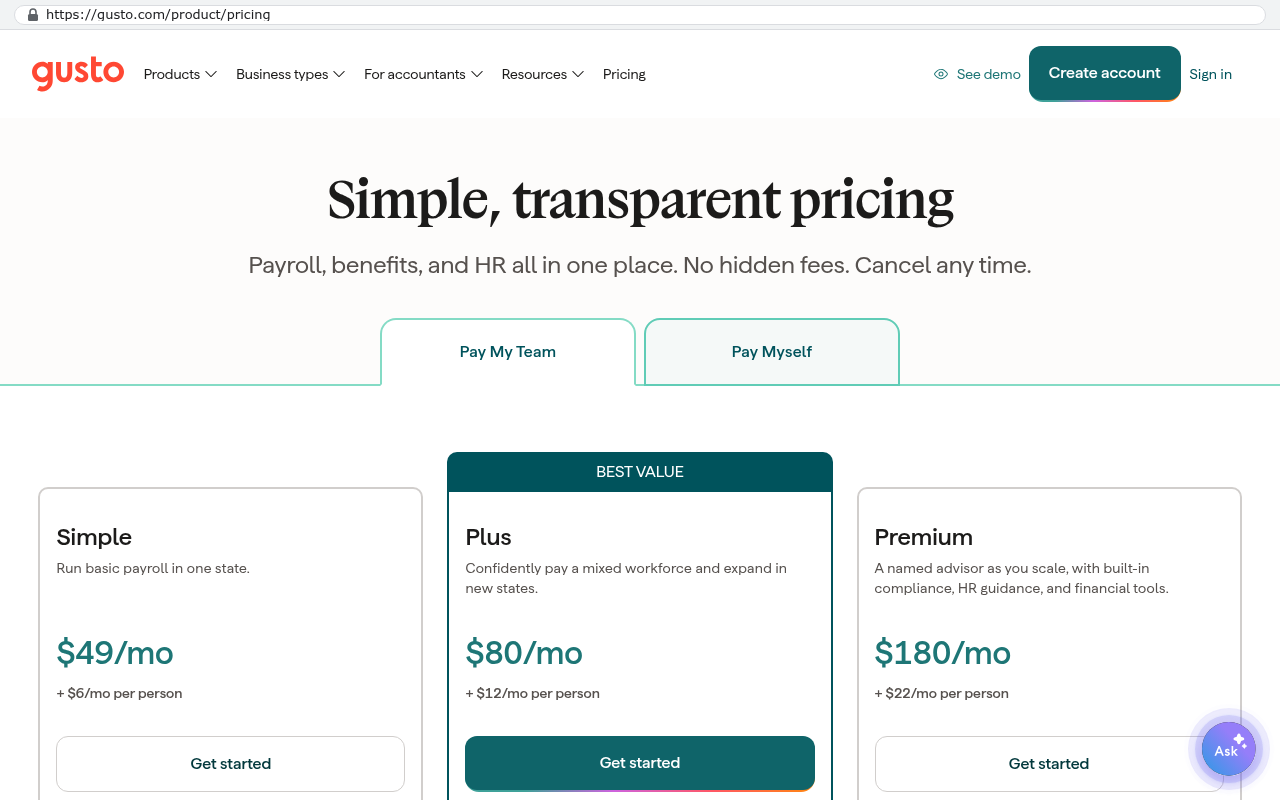
I'd rather lose the work than sell you something that doesn't fit. Don't build where the market has already solved it well and cheaply. Accounting software, email, document storage, payroll, video calls. These are mature, cheap, and constantly improved by companies with hundreds of engineers. You will not beat them. Payroll is the clearest case. Gusto's pricing page lists a base monthly price plus a charge per person, and no custom build competes with that for a commodity task.

Gusto pricing page displaying Simple plan at $49/mo plus $6/mo per person, Plus plan at $80/mo plus $12/mo per person marked as Best Value, and Premium plan at $180/mo plus $22/mo per person
Gusto's pricing page shows three tiers with base monthly prices starting at $49/mo plus per-person charges ranging from $6 to $22 per month. Source: gusto.com/product/pricing
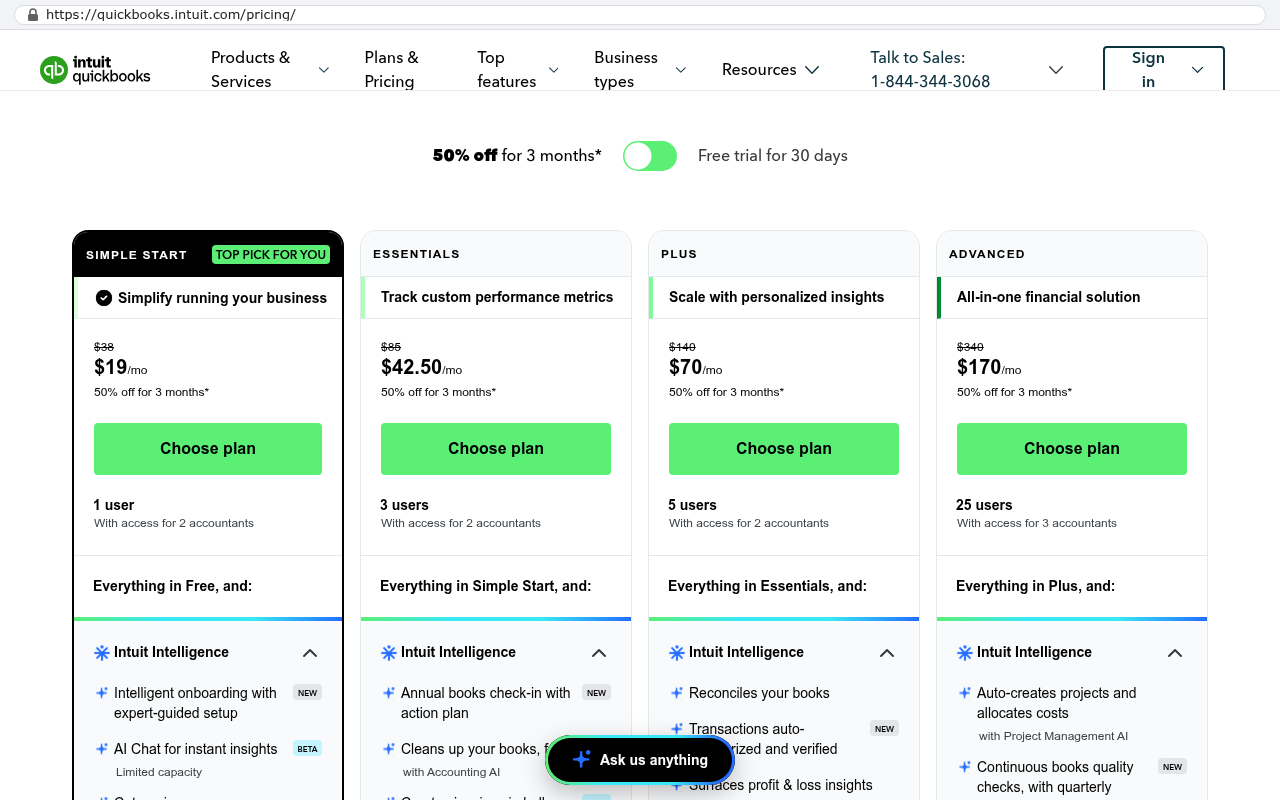
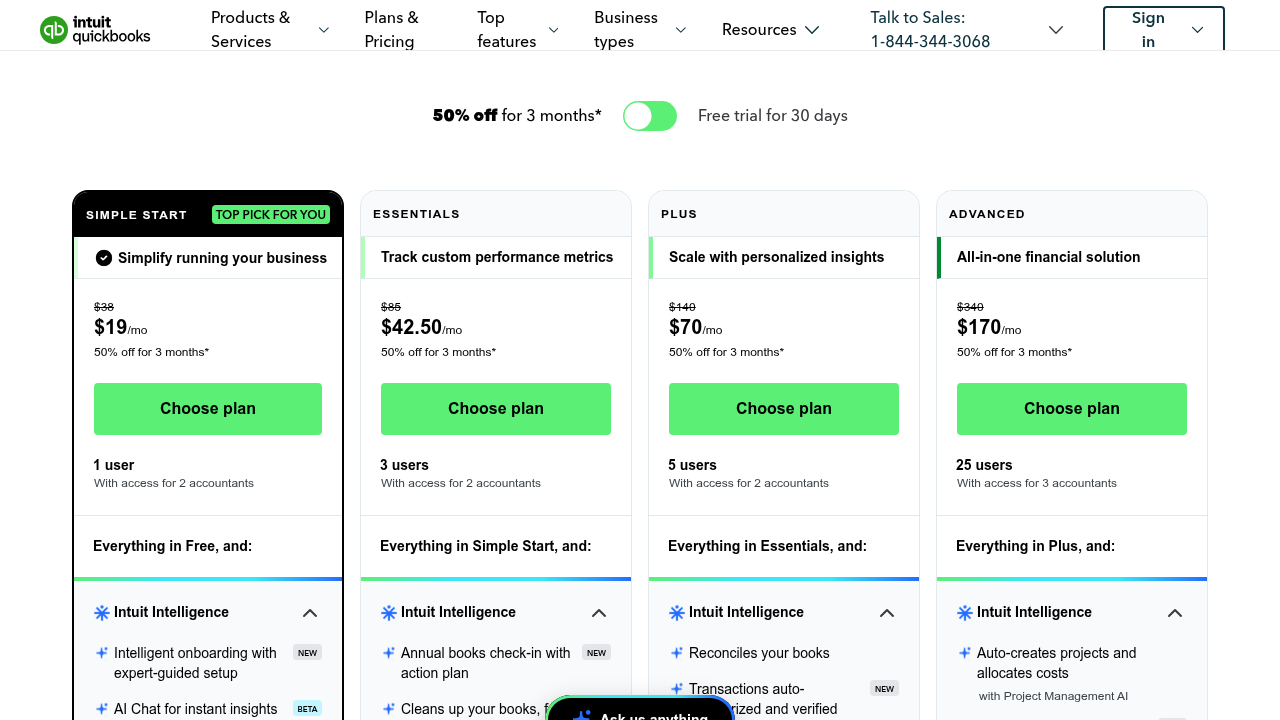
QuickBooks Online pricing page showing Simple Start at $19 per month, Essentials at $42.50 per month, Plus at $70 per month, and Advanced at $170 per month, with feature comparisons and Choose plan buttons for each tier
QuickBooks pricing page displays four plan tiers with monthly costs ranging from $19 to $170 per month, each tier offering different user counts and features. Source: quickbooks.intuit.com/pricing

Don't build if your process genuinely changes every few months. You'll pay to encode a workflow that's obsolete before launch.

Don't build if nobody internally will own it. Software needs a person who cares about it. Without one, even a good system drifts into disuse.

And be honest about the migration cost. Moving years of history out of an existing platform is scripted work, not a copy and paste. Attachments, custom fields, and archived records all need handling. It's solvable, but it's real, and any estimate that ignores it is wrong.

FAQ

Does AI mean custom software is cheap now?

Cheaper, not cheap. The routine work costs less. The discovery, the business logic, the testing, and the support still take skilled people. Expect a meaningful reduction, not a rounding error.

Will I be able to tell if the code is any good?

Not by reading it, and you shouldn't have to. Ask for the documentation, ask what automated tests exist, and ask another developer to review a sample. A vendor confident in their work will hand over the code and welcome the second opinion.

What happens if our developer disappears?

That's why ownership matters. If you hold the source code and the accounts, and the code is documented and follows normal patterns, another firm can take over. Ask about that before you sign anything, not after.

Is our data safe with AI tools involved?

Ask specifically how your data is handled. We don't feed customer data into AI tools. The tools help write code, they don't touch your records. Get that answer in writing from anyone you hire.

Should we cancel our SaaS the day we launch?

No. Run both for a while. Keep read-only access to the old system for historical lookups and cancel once you're confident. Overlapping cost for a short period is cheap insurance.

Next step

If your renewal is coming up and the number keeps climbing, do the five year arithmetic first. Then bring it to a conversation. You can book a free strategy session and we'll walk through whether a build actually pencils out for you, including the case where it doesn't.

Read this next: our breakdown of what it really costs to own your software versus renting it, which walks through the full five year comparison line by line.

Related reading: how to plan a data migration off a SaaS platform without losing history, what to ask a software vendor before you sign, and when consolidating three tools into one system pays for itself.

Questions

Frequently asked questions

How much can AI tools reduce the cost of building custom software?

AI tools handle the repetitive 60 to 70 percent of a custom build, which significantly drops the hours and therefore the cost. The expensive part was never the clever business logic, it was the plumbing like login screens, user permissions, forms, and audit trails. AI writes this scaffolding well, allowing a system that would have needed a long build a decade ago to be scoped much smaller.

Is custom software now affordable for small and mid-sized businesses?

Yes. The cost of building custom software has dropped enough that the payback period has shifted from unrealistic to something a finance person can defend. When you add up total subscription costs over five years with realistic annual increases, the crossover point often favors a custom build. Custom now makes financial sense at much smaller scale than it used to.

Can I just let AI generate all my code?

No. Human review is not optional. AI generated code has real failure modes around security, edge cases, and confident nonsense. An experienced engineer must read and fix what's wrong. AI doesn't know your business specifics, like how your Tampa branch invoices differently because of a legacy contract. Someone has to find that out and encode it correctly.

Why did businesses choose SaaS over custom software before?

Businesses didn't choose SaaS because it fit better. They chose it because custom was out of reach due to high upfront cost and risk. Renting solved that with small monthly payments and someone else maintaining the system. The tradeoff was living inside someone else's idea of how work should go, complete with workarounds and inefficiencies.

What are the real dangers of AI generated code?

AI writes confident wrong code without hedging. It produces something that looks right, compiles, and passes casual inspection but can be subtly broken in ways you discover later, like an invoice calculation error in month four. The tone of the output gives no signal about correctness, which is genuinely dangerous.

Should I cancel my SaaS subscription and build custom software instead?

Not necessarily. Custom still loses to SaaS for commodity functions like email or accounting. However, before your next renewal, calculate your total cost including subscription fees, per-seat overage, integration middleware, implementation consultants, and internal administration time over five years. Most owners are surprised when they run this number against a build cost.

What types of business processes benefit most from custom software now?

When custom was expensive, only crown jewel processes justified a build. Now the second and third tier processes qualify too. If you currently have workarounds like spreadsheets bridging systems or people re-keying data between tools, those are candidates for custom builds that AI can now make economically viable.

Read this next

When staying on your current platform is the right call

Custom software isn't always the answer. Here's the arithmetic, the warning signs, and the honest caveats that tell you whether to renew your platform or replace it.

If this is your situation

Talk it through on a call

Thirty minutes over video with the person who would run the build. You talk, we ask questions, and you leave with a plain read on whether custom software makes sense for you. If the answer is that your current tool is fine and badly configured, you will hear that.

Book a strategy call

Who wrote this

David Verneuille

David Verneuille

Founder, Black Badger Software Solutions

David Verneuille founded Black Badger after 18 years as a project manager and years implementing Smartsheet, monday.com, Wrike and Zoho for clients. He now builds custom systems that clients own outright, which is why the writing here is specific about where each platform fits and where it stops fitting.

About Black Badger

Drafted with AI assistance, then checked, edited, and approved by a person before publishing. The facts, opinions, and recommendations are ours.

Related

More on project management

More reading

Read this next

Want this looked at properly?

An article can only go so far without knowing your systems. Book a strategy call, walk us through what is breaking, and you will get a straight read on whether custom software is the right answer.