Skip to content
BlackBadger

Blog / General

The operations problems that finally push a company off a platform

/ 10 min read

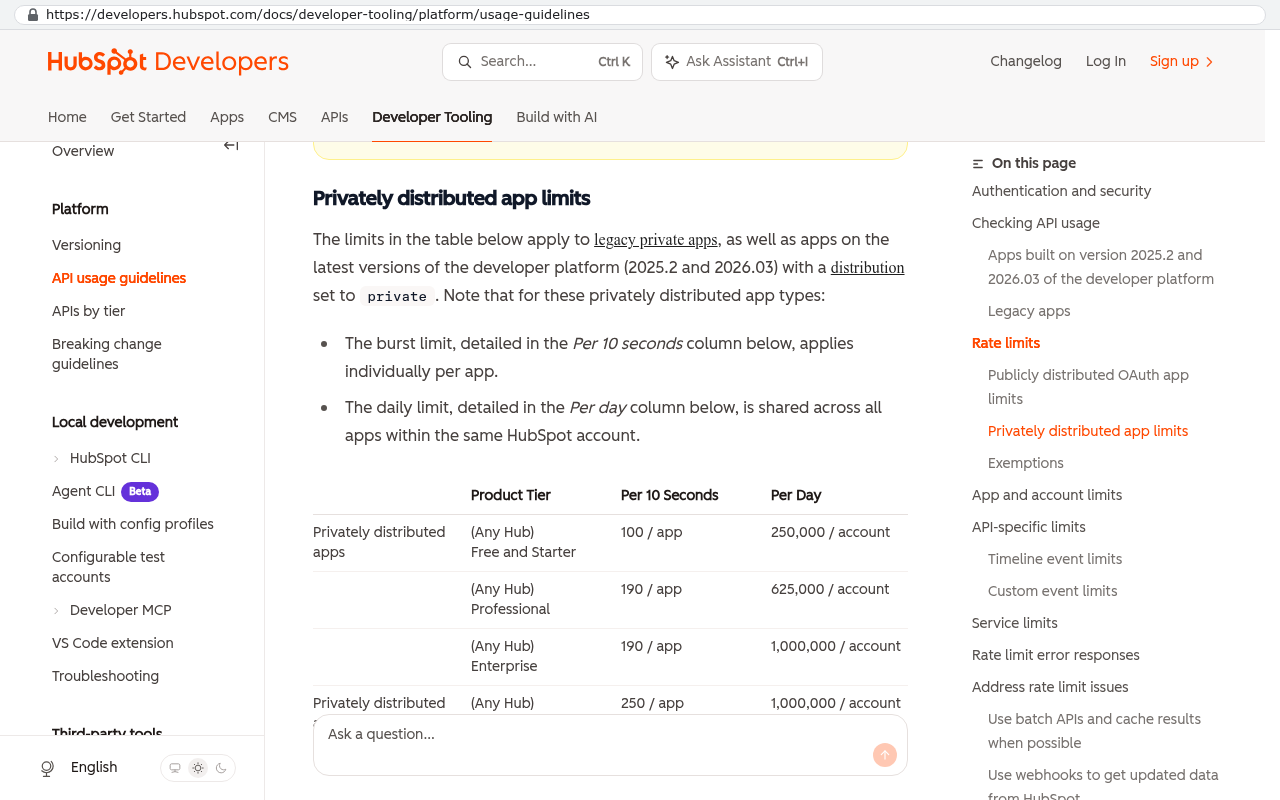
HubSpot Developers API usage guidelines page displaying rate limits table with columns for Product Tier, Per 10 Seconds, and Per Day, showing limits ranging from 100 to 250 requests per app per 10 seconds and 250000 to 1000000 requests per account per day

TL;DR

Companies abandon software platforms when their operations no longer fit inside the system's constraints, not because of price increases, with five predictable triggers that signal a genuine structural mismatch rather than temporary friction.

Key takeaways

  • A platform becomes a critical problem when your team builds manual workarounds at scale, such as maintaining multiple spreadsheets alongside the software that become the true system of record.
  • Reporting failures trigger more platform exits than any other factor, occurring when leadership asks the same question weekly but the system cannot provide a clean answer without manual spreadsheet assembly.
  • Vendors moving features you already depend on into higher pricing tiers creates sudden cost increases with no customer input, such as a 75,000 dollar annual jump when a single feature shifts to a premium plan.
  • Per seat pricing transforms headcount decisions into software budget decisions, making hiring constraints tied to licensing costs rather than business needs.
  • Temporary friction improves through configuration and training, while structural mismatch worsens as the company grows and the gap between platform capabilities and business workflows becomes more severe.
  • Documenting every workaround, spreadsheet, and manual process while the pain is fresh creates the actual requirements specification for selecting a replacement platform.
  • Two or more triggers occurring simultaneously typically indicates departure within a year, making it important to distinguish between ordinary annoyance and genuine operational breakdown.

Most companies don't quit a software platform because it got expensive. They quit because the work stopped fitting inside it. The renewal invoice just gives them a date to argue about.

We've watched this play out with project management tools, CRMs, field service apps, and full ERPs. The pattern is consistent enough that you can usually predict the exit eighteen months before it happens. Below is what that pattern looks like, how to tell real structural mismatch from ordinary annoyance, and what to write down while the pain is still fresh.

TL. DR

Companies leave platforms when operations break, not when prices rise. The five common triggers are an unmodelable workflow, reporting that can't answer leadership's weekly question, a feature moved to a higher tier, an acquisition or business model change, and per seat pricing that starts affecting hiring. Price is usually the excuse, not the cause. Document the failures while they're happening, because that record becomes the requirements list for whatever replaces the platform.

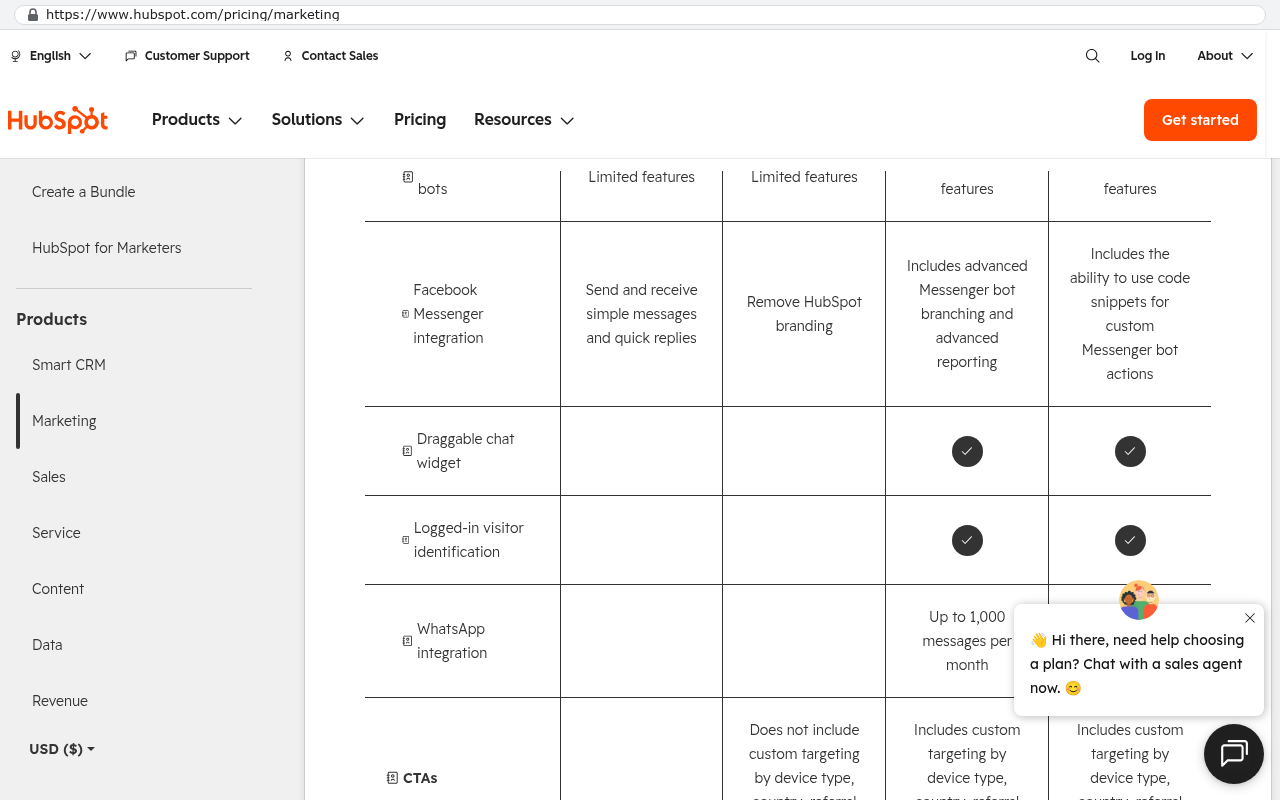
HubSpot Marketing pricing comparison table displaying which features are included in Starter, Professional, and Enterprise tiers with checkmarks indicating feature availability
HubSpot pricing page for Marketing showing a comparison table of plan tiers with features like Facebook Messenger integration, draggable chat widget, and logged-in visitor identification distributed across Starter, Professional, and Enterprise plans Source: www.hubspot.com/pricing/marketing

Key takeaways

  • A platform becomes a problem when your team builds manual workarounds at scale, not when a feature is missing once.
  • Reporting failure is the most common trigger, because leadership asks the same question every week and nobody can answer it from the system.
  • Vendor repackaging moves features you already depend on into a tier you didn't budget for, and you have no vote.
  • Per seat pricing turns headcount into a software decision, which is backwards.
  • Temporary friction gets better with configuration and training. Structural mismatch gets worse as you grow.
  • Write down every workaround, spreadsheet, and rekeyed field now. That list is your replacement spec.
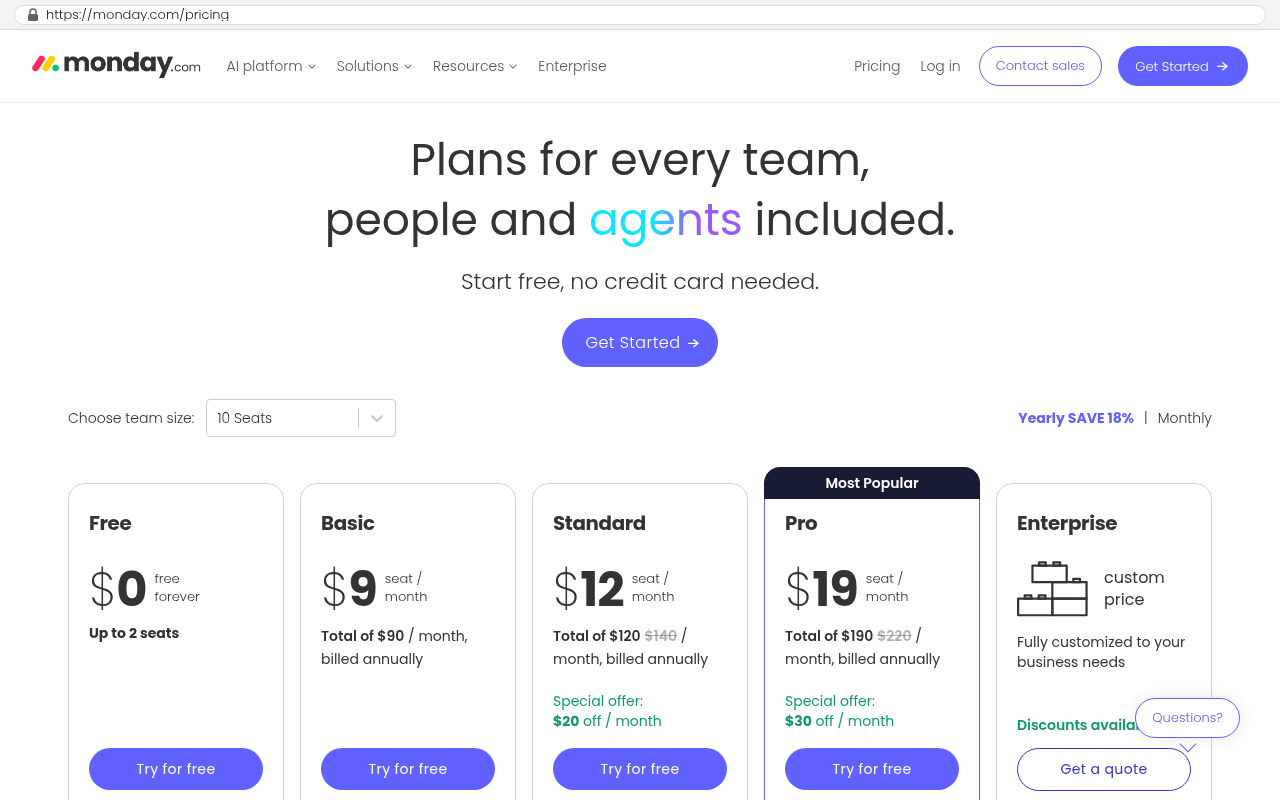
Monday.com pricing page showing five subscription plans with per-seat monthly pricing clearly displayed for each tier from free to pro plan at 19 dollars per seat per month
Monday.com pricing page displays five plans with per-seat costs ranging from free to 19 dollars per month per seat plus custom enterprise pricing Source: monday.com/pricing

Nobody leaves over the invoice

Price complaints are loud and easy to say out loud in a meeting. "Our workflow doesn't fit" is harder to say, because it sounds like the team's fault. So the renewal becomes the fight, even when the real problem started two years earlier.

Here's what the honest version looks like. An operations manager quietly builds a spreadsheet to track the thing the platform won't track. Then someone builds a second one. Then a new hire gets trained on the spreadsheets before they get trained on the software. At that point you're paying for a system of record that isn't the system of record anymore.

Once that split happens, the cost conversation is just the trigger. The decision was already made on the floor.

Count the spreadsheets. If your team maintains more than two or three shadow trackers alongside the platform, you're already running a hybrid system and paying full price for half of it.

The five triggers that actually end a platform relationship

These show up in different industries with the same shape. One alone is survivable. Two at once usually means you're leaving within a year.

One, a workflow the platform can't model

Every platform has an opinion about how work flows. A job goes from quoted to scheduled to completed to invoiced. That opinion is fine until your business does something the vendor never imagined.

Say you run a fabrication shop where a single order splits into three production runs, each with its own delivery date, but bills as one invoice against a customer deposit. Plenty of ERPs simply cannot hold that shape. So your team creates three fake orders, tracks the real one in a spreadsheet, and manually reconciles at month end. That works at twenty orders a month. At three hundred, it's a full time job and an error source.

The tell is not "we can't do this." The tell is "we do this by hand every time."

Two, reporting that can't answer the weekly question

This one kills more platforms than any other. Leadership asks the same question every Monday. Gross margin by job type. Utilization by crew. Which accounts grew and which shrank. And nobody can pull it from the system.

Usually the data exists. It's just scattered across modules that don't join cleanly, or locked behind a reporting tool that only handles one object at a time. So an analyst exports three CSV files, pivots them in Excel, and emails a PDF. Every week. Forever.

That person is now a human integration layer. When they leave, the reporting leaves with them.

If your weekly leadership report is assembled by one person in a spreadsheet nobody else understands, you have a single point of failure dressed up as a process. Fixing the report is not the goal. Owning the data is.

Three, the feature you depend on moves to a higher tier

Vendors repackage. It's normal and it's their right. But when advanced approvals, or API access, or custom fields beyond a certain count get pushed into the next plan up, you don't get a vote.

The math gets ugly fast. Ninety users on a plan at 95 dollars a month is 102,600 a year. Move to the tier that has the one feature you need at 165 a month and you're at 178,200. That's a 75,000 dollar increase for a capability you already had last quarter.

What makes this a trigger rather than a grumble is the precedent. If it happened once, it will happen again, and your cost base is now set by someone else's roadmap.

Four, an acquisition or a business model change

You buy a competitor. Now you have two chart of accounts structures, two customer numbering schemes, and a platform configured for one company. Or you shift from selling projects to selling subscriptions, and the system has no concept of recurring revenue recognition.

Platforms are configured around the business you were. They're rarely flexible enough for the business you just became. We've seen companies run two instances of the same tool side by side for years after an acquisition because merging them was harder than living with the split. Every cross-company report gets built by hand.

Five, per seat cost turning into a hiring constraint

Watch for the moment someone asks whether a new dispatcher really needs a full license. That's the day the software started making your staffing decisions.

Per seat pricing punishes exactly the thing you want, which is more people using the system. So teams share logins, which breaks your audit trail. Or they keep warehouse staff out of the system entirely, which means someone rekeys their paperwork. A 200 person company paying 1,140 a year per seat is spending 228,000 annually, and most of those users touch four screens.

Telling temporary friction from structural mismatch

Not every complaint means it's time to leave. Plenty of platform pain is self-inflicted, and rebuilding won't cure it.

Temporary friction usually comes from bad configuration, skipped training, or a process nobody wrote down. It responds to effort. You bring in someone who actually knows the tool, they fix the field mapping, retrain the team, and six weeks later the complaints stop. That's a fixable problem and you should fix it rather than start over.

Structural mismatch behaves differently. It gets worse with volume. The workaround that took five minutes per order still takes five minutes per order, but now there are ten times as many orders. No amount of training removes it, because the platform's data model can't hold what your business does.

Three practical tests help separate the two. First, ask whether the vendor's own support team has ever solved it for another customer. If they suggest a workaround instead of a setting, that's structural. Second, ask whether the pain scales with growth or stays flat. Third, ask whether the fix requires changing how you do business. If the answer is yes and the business reason for doing it your way is sound, the platform is wrong, not you.

Before you decide anything, spend two weeks logging how long each manual workaround takes and how often it runs. Multiply it out. That number carries more weight in a board conversation than any complaint about the interface.

What to write down while it still hurts

The worst time to gather requirements is six months after you've decided to switch. Everyone's already adapted. The workarounds feel normal again and the details get forgotten.

Capture it while it's raw. You want a plain record of what actually happens, not a wish list. A good record includes the following.

  • Every spreadsheet and shared doc running alongside the platform, who owns it, and what it tracks
  • Every place data gets typed twice, with the two systems named
  • The exact questions leadership asks that nobody can answer from the system
  • Screenshots of the workarounds, including the fake records and dummy fields people create
  • The approvals and exceptions that happen over email or text because the platform can't route them
  • Which integrations exist, who built them, and what breaks when the vendor updates

That list is more useful than any feature comparison chart. It describes your actual operation in the vendor's absence. When it comes time to scope a replacement, custom or otherwise, you hand over the record and skip three months of discovery meetings.

When leaving is the wrong call

A custom build is not the automatic answer, and we'd rather say that plainly than sell you something you'll regret.

If your core problem is a standard workflow done badly, stay and fix the configuration. Accounting, payroll, and general ledger are genuinely solved problems. Rebuilding those from scratch is a bad use of money in almost every case. Buy them, integrate them, move on.

Migration is also a real cost that people underestimate. Ten years of attachments in a platform's file store don't copy over with a button. They need a scripted export, and some vendors rate limit their APIs hard enough that a full extract takes weeks of background jobs. Historical records with deleted users, merged accounts, and inconsistent field usage need cleanup decisions before anything imports. Budget for that honestly.

HubSpot Developers API usage guidelines page displaying rate limits table with columns for Product Tier, Per 10 Seconds, and Per Day, showing limits ranging from 100 to 250 requests per app per 10 seconds and 250000 to 1000000 requests per account per day
HubSpot Developers documentation page on API usage guidelines showing a table with per-10-seconds and per-day rate limits across product tiers from Free and Starter to Enterprise. Source: developers.hubspot.com/docs/developer-tooling/platform/usage-guidelines

And if your customers log into the vendor's portal today, replacing it means retraining them too. That's not a reason to stay forever. It is a reason to phase the move instead of flipping a switch.

Where custom wins is the middle layer. The parts that are specific to how you make money, that no vendor models well, and that you're currently holding together with spreadsheets and rekeyed data. Own that. Buy the commodity pieces around it.

FAQ

How do I know if we're at a real breaking point or just complaining?

Measure the workarounds. If manual steps consume more than a few hours a week across the team and grow with volume, it's structural. If it's one annoying screen, it isn't.

Can't we just add an integration tool and keep the platform?

Sometimes, yes. Middleware fixes data movement between systems well. It doesn't fix a data model that can't represent your work in the first place.

What's the biggest mistake companies make when switching?

Rebuilding what they had instead of what they need. Teams copy the old platform's screens out of habit and inherit its limitations on day one.

Do we have to replace everything at once?

No, and you shouldn't. Pull out the one workflow causing the most manual labor, build that, run it alongside the platform, and expand from there.

What happens to our data if we leave?

Export it early and check it. Test a full extract while you're still paying, because access ends when the contract does, and some vendors strip attachments and audit history from exports.

Next steps

Start with the log. Two weeks of honest notes about what your team does by hand will tell you more than any demo. If that list turns out to be long, and it usually does, we're happy to look at it with you and say whether it's a configuration problem or a build problem. You can book a free strategy session and bring the list.

Read this next: Build versus buy, the arithmetic most companies skip.

Related reading:

Questions

Frequently asked questions

What's the most common reason companies actually leave a software platform?

Companies leave when their operations no longer fit inside the platform's workflow, not because of price increases. The renewal invoice simply provides a date to argue about. The real trigger is usually one of five structural problems: unmodelable workflows, reporting that can't answer leadership questions, features moved to higher tiers, business changes after acquisitions, or per seat pricing affecting hiring decisions.

How can I tell if we have a real problem or just temporary friction with our platform?

Temporary friction improves with configuration and training. Structural mismatch gets worse as you grow. A real problem shows up as manual workarounds at scale, not a single missing feature. If your team maintains multiple spreadsheets alongside the platform and new hires train on those spreadsheets before the software, you're running a hybrid system and paying full price for half of it.

What happens when a reporting feature can't answer our weekly leadership questions?

This is the most common trigger for leaving a platform. When leadership asks the same question every week but the system can't provide the answer, analysts typically export data to Excel and email PDFs. That person becomes a human integration layer. If one person understands the spreadsheet and leaves, your reporting disappears with them, creating a dangerous single point of failure.

How much can our costs increase if a platform moves features to a higher tier?

When a vendor moves a required feature to a higher plan, the financial impact is substantial. For example, moving 90 users from a 95 dollar per month plan to 165 dollars for one additional feature costs an extra 75,000 dollars annually. The real problem is the precedent it sets: if it happened once, it will happen again, making your costs dependent on someone else's roadmap.

What should we document before switching platforms?

Write down every workaround, spreadsheet, and rekeyed field while the problems are still fresh and painful. That list becomes your requirements specification for replacing the platform. Documentation captures what's actually broken in your current system and ensures you don't repeat the same problems with your next solution.

How does per seat pricing affect hiring decisions?

Per seat pricing becomes a problem when someone asks whether a new employee really needs a full license. That's when software starts making your staffing decisions instead of supporting them. Per seat pricing punishes growth and hiring, which is backwards for a tool meant to help your business scale.

Can we solve platform problems by adding integration tools or more configuration?

Integration tools don't fix structural mismatch. When your workflow fundamentally doesn't fit the platform's design, or when the platform was built for a different business model than yours, adding tools treats the symptom. Real solutions require either reconfiguring your operations to fit the platform's model or replacing the platform entirely.

Read this next

When staying on your current platform is the right call

Custom software isn't always the answer. Here's the arithmetic, the warning signs, and the honest caveats that tell you whether to renew your platform or replace it.

If this is your situation

Talk it through on a call

Thirty minutes over video with the person who would run the build. You talk, we ask questions, and you leave with a plain read on whether custom software makes sense for you. If the answer is that your current tool is fine and badly configured, you will hear that.

Book a strategy call

Who wrote this

David Verneuille

David Verneuille

Founder, Black Badger Software Solutions

David Verneuille founded Black Badger after 18 years as a project manager and years implementing Smartsheet, monday.com, Wrike and Zoho for clients. He now builds custom systems that clients own outright, which is why the writing here is specific about where each platform fits and where it stops fitting.

About Black Badger

Drafted with AI assistance, then checked, edited, and approved by a person before publishing. The facts, opinions, and recommendations are ours.

Related

More on general

More reading

Read this next

Want this looked at properly?

An article can only go so far without knowing your systems. Book a strategy call, walk us through what is breaking, and you will get a straight read on whether custom software is the right answer.